
- Tuo AI

- Live

- My Account
- Shopping Cart
- Inquiry Basket
- Contact Us
- Back to Top




Cable Tray Roll Forming Machines
Cable tray roll forming machines continuously produce cold-formed electrical cable containment systems, including perforated cable trays, solid-bottom troughs, and cable ladder side rails for commercial data centers, industrial refineries, and infrastructure tunnels. Engineered to process pre-galvanized, stainless steel (AISI 304/316), and aluminum coils (1.0 mm to 2.5 mm thick), modern automatic lines feature motorized width adjustment (covering tray widths from 100 mm to 800 mm) on a single machine chassis. Integrated with high-speed hydraulic pre-punching presses for ventilation slot matrices and synchronized profile shears, these lines deliver burr-free edges and high daily output. Explore verified machine specifications, tooling drawings, and turnkey options below.
 Automatic PLC‑Controlled Multi‑size Cable Tray Production Machine
- Customizable
$25,990.00
MOQ: 1
 High Speed Automatic Cable Tray Roll Forming Machine for Steel Structure
- cable tray roll forming machine
$35,000.00
MOQ: 1
 Automatic Cable Tray Roll Forming Machine
- ZTRFM-cable tray
$45,000.00
MOQ: 1
 PLC Control High-Accuracy Automatic Cable Tray Production Line
- ZTRFM-cable tray
$25,000.00
MOQ: 1
 Cable Tray Roll Forming Machine with Perforated Bending and Molding for Electrical
- ZTRFM-cable tray
$15,000.00
MOQ: 1
 Cable Tray Ladder Bridge Roll Forming Machine Electrical Bender Molding Equipment
- ZTRFM-cable tray roll forming machine
$50,000.00
MOQ: 1
 Automatic Cable Tray Roll Forming Machine Metal Cable Tray Making Machine
- ZTRFM-cable tray
$30,000.00
MOQ: 1
 Fully Automatic High Precision Cable Tray Roll Forming Machine
- High Precision
$60,000.00
MOQ: 1
 Perfect Cable Tray Housing Forming Machine 6-10 m/minute (depend on
- 6-10 m/minute (depend on holes quantity).
$127,000.00
MOQ: 1
 Automatic Cable Tray Roll Forming Machine for Production High Precision
- High Precision
$15,000.00
MOQ: 1
 Fully Automatic Cable Tray Roll Forming Machine for Custom Production
- High Precision
$27,000.00
MOQ: 1
 High-Accuracy Perforated Cable Tray Roll Forming Machine
- customized
$105,500.00
MOQ: 1
 Fully Automatic Cable Tray Roll Forming Machine Production Line
- High Precision
$84,000.00
MOQ: 1
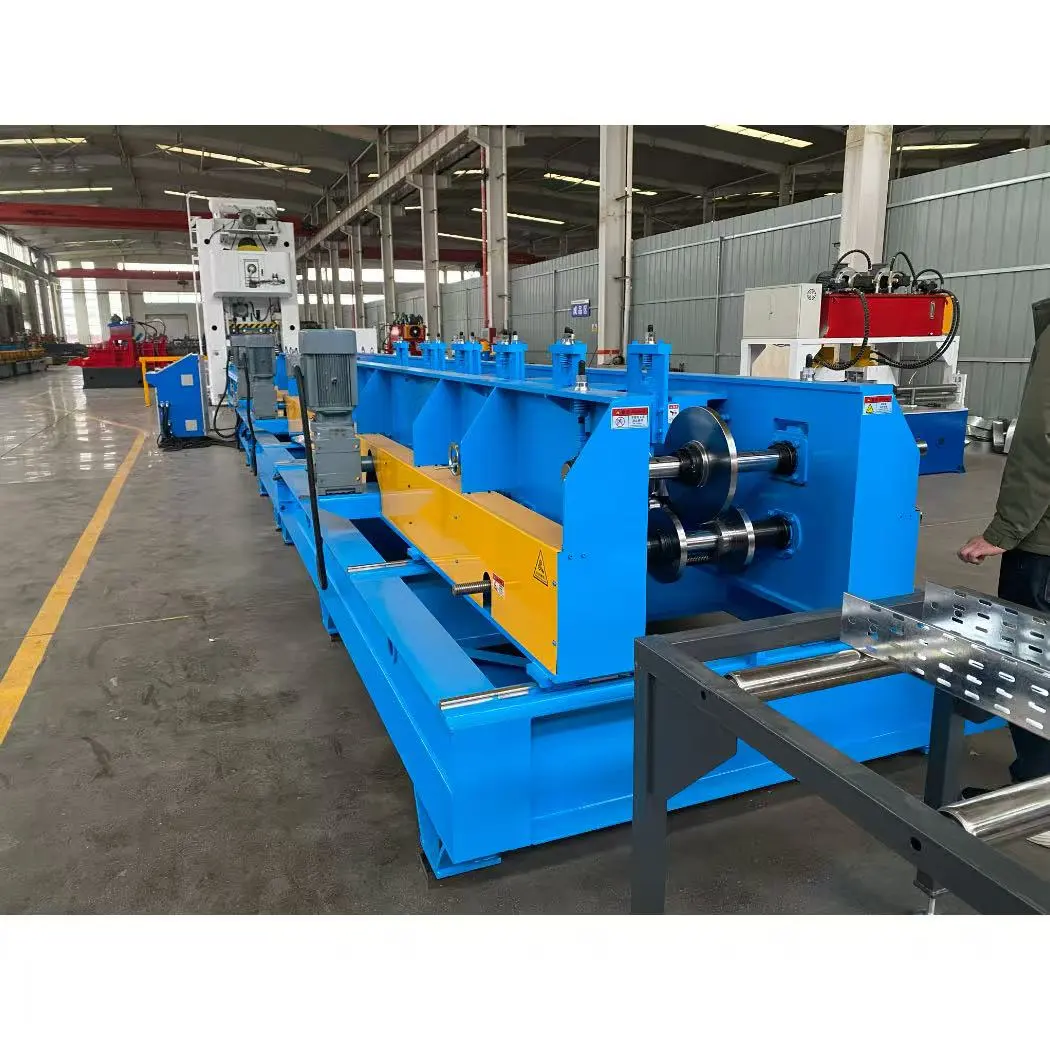 Adjustable 50-600mm Cable Tray Roll Forming Machine Punching
- ZTRFM Cable Tray Roll Forming Machine+11kw+15 m/min
$56,000.00
MOQ: 1
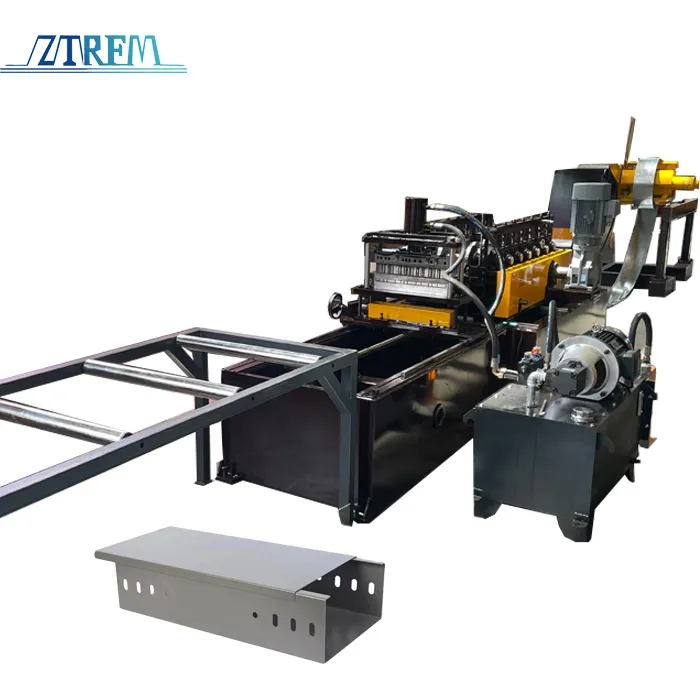 Muti Sizes In One Cover Roll Forming Machine Steel Cable Tray
- 16m/min+ZTRFM+1500
$12,000.00
MOQ: 1
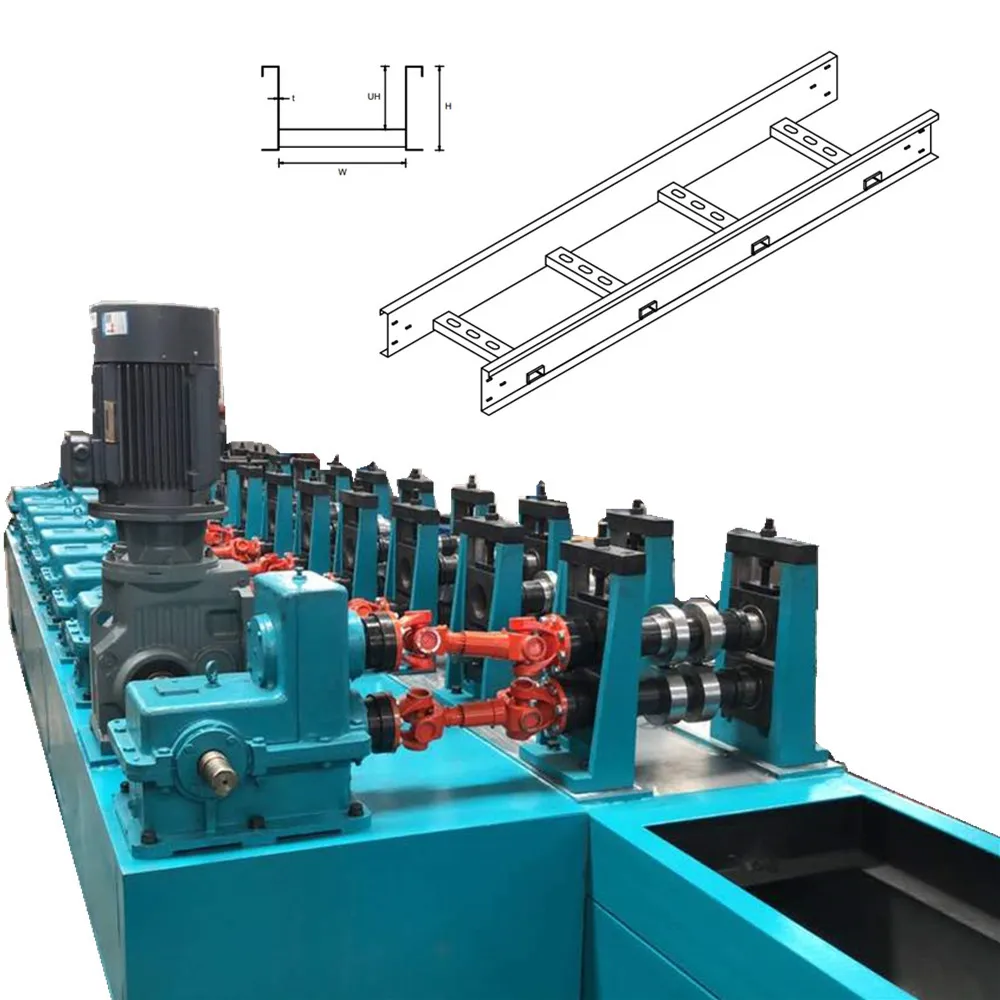


About Cable Tray Roll Forming Machines
Cable tray roll forming machines represent indispensable equipment for electrical distribution, telecommunications, and industrial infrastructure manufacturing. Cable management systems protect and organize power transmission cables, control wiring, and fiber-optic communication lines across commercial buildings, petrochemical plants, transit tunnels, and renewable energy facilities.
Modern machinery produces three primary cable containment families: perforated cable trays with ventilated bottom patterns providing heat dissipation and cable tie-down slots; solid-bottom enclosed cable troughs offering electromagnetic shielding and dust protection; and heavy-gauge C/Z side rails for industrial cable ladder systems. Advanced lines feature motorized stepless width adjustment: driven by precision lead screws and digital position encoders, the two lateral forming roller banks expand or contract symmetrically to form tray bottom widths from 100 mm to 800 mm and flange side heights from 50 mm to 150 mm without manual roller disassembly.
The complete production line incorporates a 5-ton hydraulic decoiler, a 7-roll precision leveler, a high-tonnage wide-bed mechanical or hydraulic pre-punching press equipped with CNC multi-pattern progressive perforation dies (punching bottom ventilation slots, side-flange connector holes, and earth grounding slots), 18 to 24 precision roll forming stations utilizing solid GCr15 or Cr12MoV vacuum heat-treated rollers, and an intelligent hydraulic profile shear with interchangeable blade inserts operating at production speeds of 10 to 20 m/min.
Applications
Commercial Data Center Server Room Cable Trays
Overhead suspended perforated cable trays roll formed for hyperscale data centers, carrying high-density fiber-optic network cables with superior heat dissipation.
Industrial Petrochemical Plant Heavy Cable Ladders
Heavy-duty hot-dip galvanized and stainless steel cable ladder channels routed along refinery pipe racks, carrying high-voltage industrial power cables under chemical exposure.
Metropolitan Subway & Railway Tunnel Cable Routing
Corrosion-resistant fire-rated steel cable trays mounted along curved subway railway tunnel walls, organizing traction power, signaling, and safety communications.
Pharmaceutical Cleanroom Hygienic Cable Troughs
Enclosed stainless steel (AISI 304) smooth cable duct troughs with snap-on covers providing sanitary, washdown-resistant cable containment in cleanrooms.
Offshore Substation Marine Cable Management
Heavy-duty marine-grade stainless steel and galvanized cable ladder trays supporting subsea power cables on offshore wind farm converter platforms.
Technical Overview
| Parameter | Information |
|---|---|
| Machine / Product Family | Automatic width-adjustable perforated cable tray & trough roll forming line |
| Applicable Coil Materials | Pre-galvanized steel (GI), stainless steel (304/316), structural aluminum (5052) |
| Material Thickness Range | 1.00 mm – 2.50 mm (20-gauge to 12-gauge strip) |
| Tray Width Range (W) | 100 mm – 800 mm (motorized stepless adjustment via PLC & lead screws) |
| Flange Height Range (H) | 50 mm – 150 mm (standard 50 mm, 75 mm, 100 mm, 150 mm side heights) |
| Punching System & Press | 125T – 200T wide-bed mechanical/hydraulic press with progressive slot dies |
| Forming Stations & Tooling | 18 – 24 stations (solid GCr15 / Cr12MoV vacuum hardened rollers, HRC 58–62) |
| Return Lip Profile | Inward safety hemmed lips designed for snap-on cover retention |
| Cutting System & Shear | Hydraulic profile shear with width-adjustable modular Cr12MoV blades |
| Line Speed & Length Accuracy | 10 – 20 m/min production speed; cut length tolerance ±1.0 mm |
Related Solutions
Cable Tray Roll Forming Solution
Cable tray / ladder line, 50-600 mm width. Example: 1-2 mm, 200 t punch, 6-10 m/…
Custom Profile Roll Forming for OEM
Flexible roll forming line for custom cross-sections. Suitable for OEMs who need…
Pre-Engineered Building Component Line
Integrated solution for PEB secondary framing: C/Z purlins, girts, eave struts,…
Heavy Coil Handling Solution
Coil infeed is a weight class plus a drive: manual expand, electric expand with…
Metal Sheet Processing Solution
Blanking and cut-off around a roll former is a shear class: flying (tracking) sh…
Light-Gauge Keel Roll Forming Solution
Light-gauge keel package: partition stud and track, ceiling T-grid, furring, or…
Related Information

Cable Trays and Cable Ladders: Roll-Formed Profiles and Standards
Perforated trays, ladder trays, wire mesh - each rolls from steel or aluminum co…
Read More
What Is a Cable Tray Roll Forming Machine? Tray, Trough & Ladder Explained
cable tray roll forming machine, cable trough roll forming, cable tray making ma…
Read More
Roll Forming Roller Materials: D2 vs DC53 and Heat Treatment Guide
D2, DC53, Cr12MoV — which roller material is right for your roll forming line? H…
Read More
Cold Formed Steel vs Hot Rolled Steel: What Roll Forming Buyers Need to Know
Yield strength, ductility, surface finish, tolerances — a practical comparison o…
Read More
High-Strength Steel (HSLA) in Roll Forming
High-strength low-alloy steel lets you build lighter structures—but it fights ba…
Read More
Pre-Punching vs Post-Punching in Roll Forming
Punch the holes before or after forming? The choice changes hole accuracy, tooli…
Read More
FAQ
How does the motorized width-adjustment mechanism work on a cable tray roll forming machine?
The machine bed is split into left and right independent forming banks mounted on linear precision guide rails. An electric servo motor drives synchronized lead screws to expand or narrow the distance between the two banks, adjusting finished tray width (from 100 mm to 800 mm) via touchscreen input in under 5 minutes without changing rollers.
What cable tray types and profiles can be produced on these production lines?
Lines produce ventilated perforated cable trays, solid-bottom cable troughs, ladder tray C-shaped side rails, and snap-on top cover lids. Flange heights typically range from 50 mm to 150 mm, with rolled return lips designed to receive snap-on covers.
What material grades and sheet thickness ranges are standard for cable tray roll forming?
Standard materials include pre-galvanized steel (DX51D+Z275), hot-rolled pickled steel (Q235/SS400 for post-galvanizing), austenitic stainless steel (AISI 304 and 316L), and structural aluminum alloys (5052-H32), in thicknesses from 1.0 mm to 2.5 mm (20-gauge to 12-gauge).
How is burr-free punching achieved on cable tray bottom ventilation slots?
Ventilation slot patterns (oval slots, diamond holes, louvers) are punched using precision progressive carbide dies on a wide-bed punch press. Tight punch-die clearances (6% to 8% of sheet thickness) and die polishing prevent metal burrs, ensuring smooth edges that will not abrade electrical cable insulation.
Can one machine produce both the cable tray body and matching snap-on cover lids?
Cover lids have different flange angles and dimensions. Manufacturers typically use a dedicated compact lid roll forming machine or supply interchangeable roller cassettes that install onto the universal drive base to roll matching flat and peaked cover profiles.
Stop-to-cut vs. flying shear: which cutting system is best suited for cable trays?
Stop-to-cut hydraulic shearing with contoured blades matching the tray web and flanges is standard, providing clean square cuts across various tray widths. For dedicated high-volume lines running fixed sizes, servo flying shears achieve higher continuous throughput.
What critical features should buyers verify when sourcing a cable tray roll forming machine?
Buyers should verify maximum sheet width and thickness (up to 2.5 mm), motorized width adjustment range (100–800 mm), side flange height range (50–150 mm), punch die hole pattern drawing and tonnage (typically 125T to 200T), roller material (Cr12MoV vacuum hardened), and cut-off blade adjustability.