
- Tuo AI

- Live

- My Account
- Shopping Cart
- Inquiry Basket
- Contact Us
- Back to Top




EPS/PUR Sandwich Panel Automatic Production Lines
Continuous automatic EPS/PUR sandwich panel production lines are high-throughput industrial manufacturing systems engineered to produce insulated composite roofing and wall panels for cold storage, cleanrooms, and commercial buildings. Integrating dual hydraulic uncoilers, dual-tier roll forming stands for upper and lower prepainted steel skins (0.4 mm to 0.8 mm), high-pressure polyurethane foaming metering units, and EPS core insertion stations, these lines feed material through a 24 to 36-meter heated double-caterpillar laminating press under precise temperature and pressure control. Synchronized servo flying band-saws provide clean, burr-free transverse cut-off at line speeds up to 4–8 m/min. Browse comprehensive machinery specifications, turnkey factory layouts, and complete sandwich panel engineering proposals below.
 ZTRFM Automatic Sandwich EPS EPU Roof Wall Panel Aluminum Alloy PIR Insulated Great Wall Panel Rolling Forming Machine
- ZTRFM-sandwich panels machie
$500,000.00
MOQ: 1
 LGSF Light Steel Frame Villa Roll Forming Machine Prefab Steel Frame
- LGSF Light Steel Frame Villa Roll Forming Machine
$38,999.00
MOQ: 1
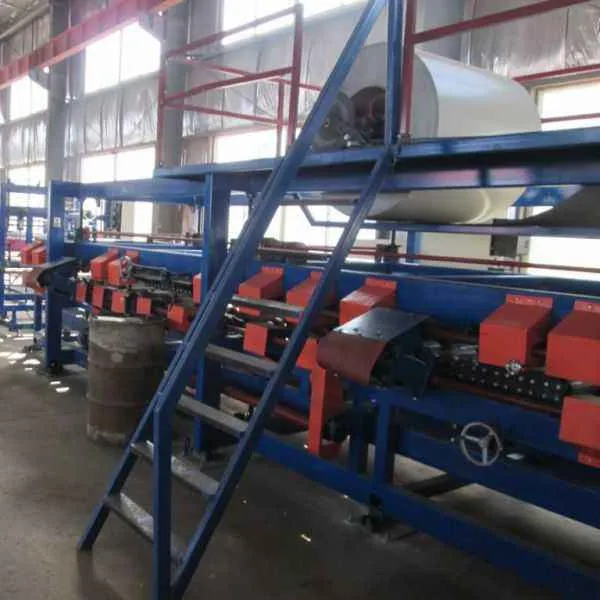 Mineral Wool Sandwich Panel Production Line Polyurethane Sandwich
- Roof sandwich forming machine+7.5kw
$45,000.00
MOQ: 1
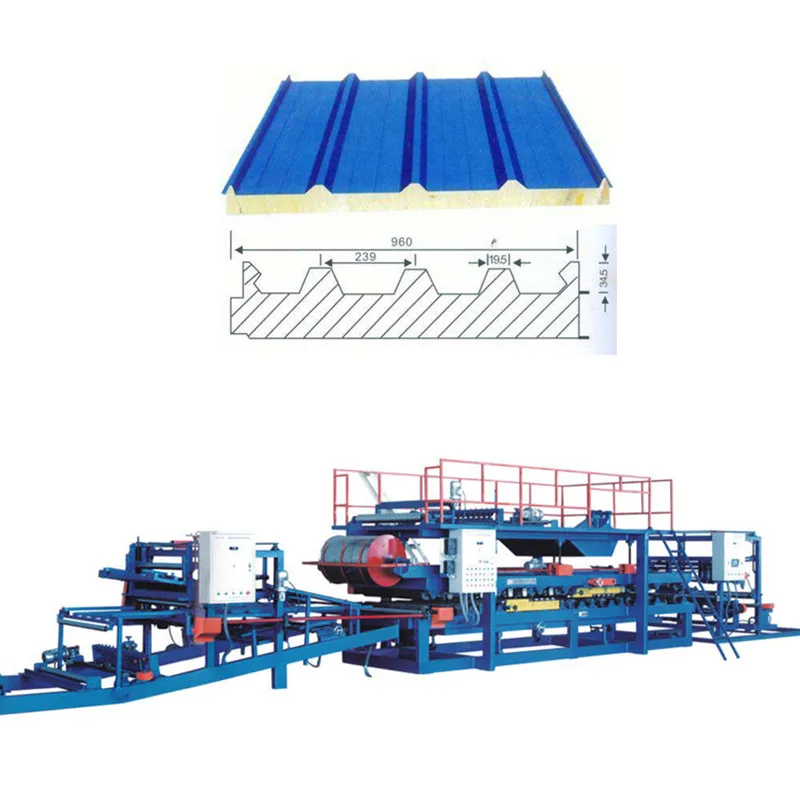 Mineral Wool Sandwich Panel Production Line Polyurethane Sandwich
- Roof sandwich forming machine+7.5kw
$45,000.00
MOQ: 1
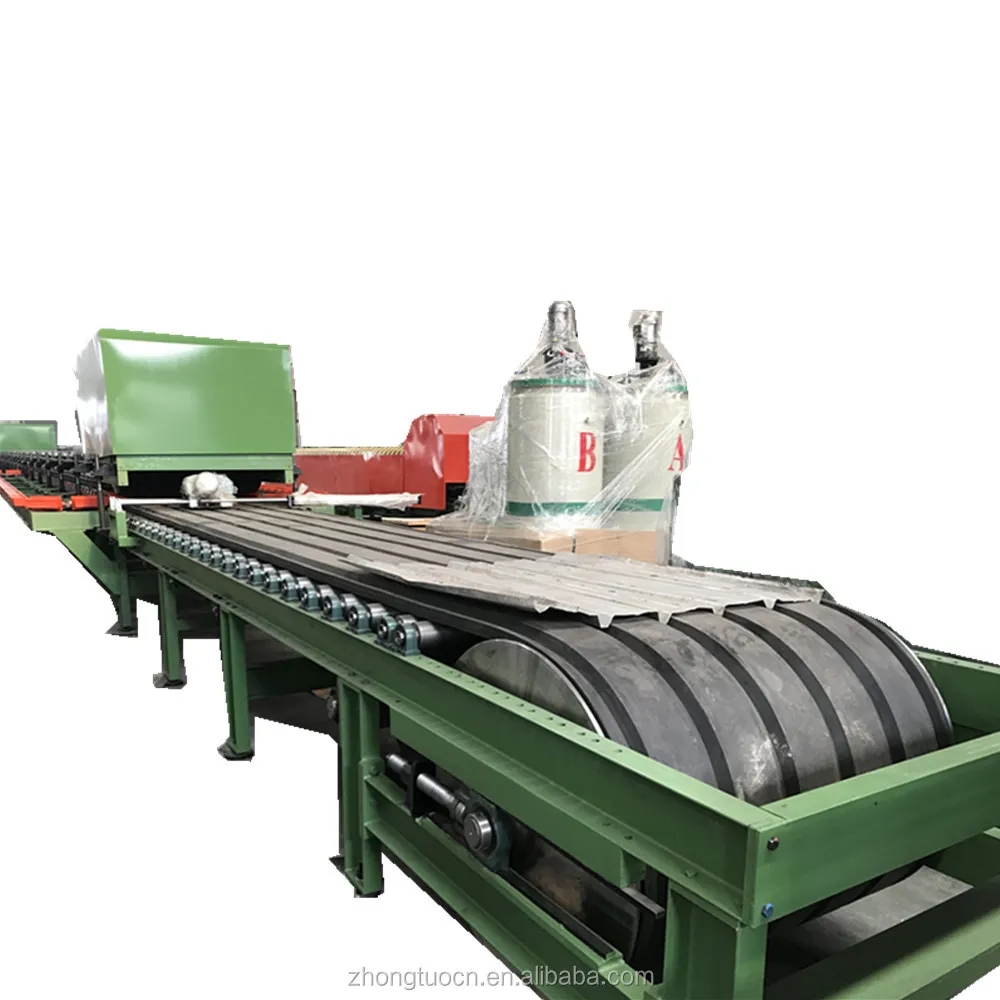 PU Mineral Wool Making Machine Sandwich Panel EPS
- ZT-1200+about 90 kw,Different as machine types
$220,000.00
MOQ: 1
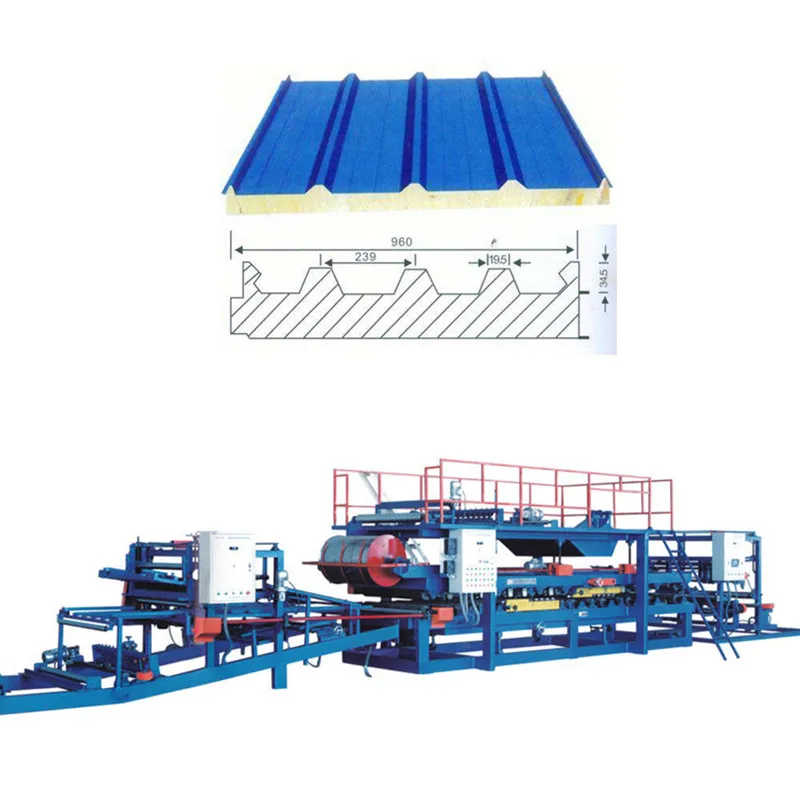 Roof Sandwich Forming Machine Colored Steel PPGI PU Sandwich
- 5 m/min+Roof sandwich forming machine+7.5kw
$45,000.00
MOQ: 1
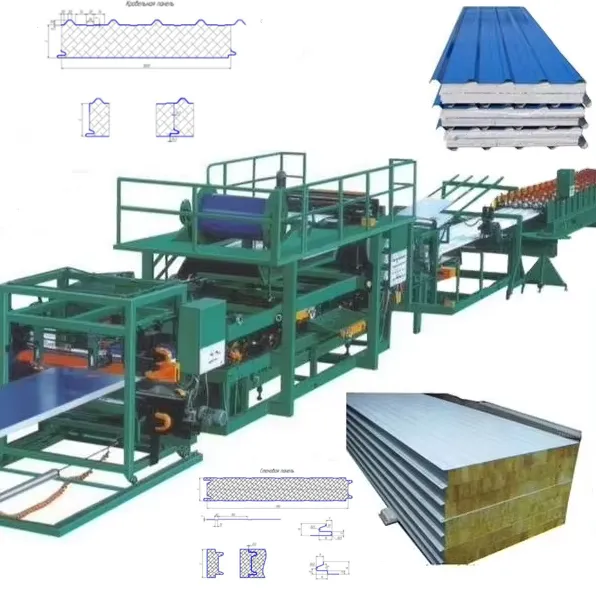 Mineral Wool Insulation Sandwich Panel Production Line Roll
- 3-10M/MIN+ZT-1200+about 90 kw,Different as machine types
$250,000.00
MOQ: 1
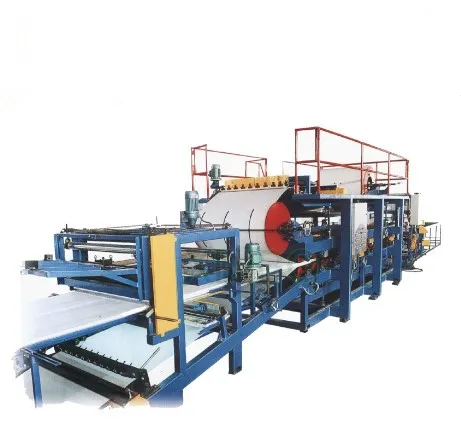 Sandwich Panel Production Machine Line Roof Sandwich Forming Machine
- 6m/min+PU+32 kw
$61,500.00
MOQ: 1
 EPS Rock Wool Sandwich Panel Production Line 5m/min PLC
- ZTRFM EPS PU sandwich panel machine production line
$39,999.00
MOQ: 1
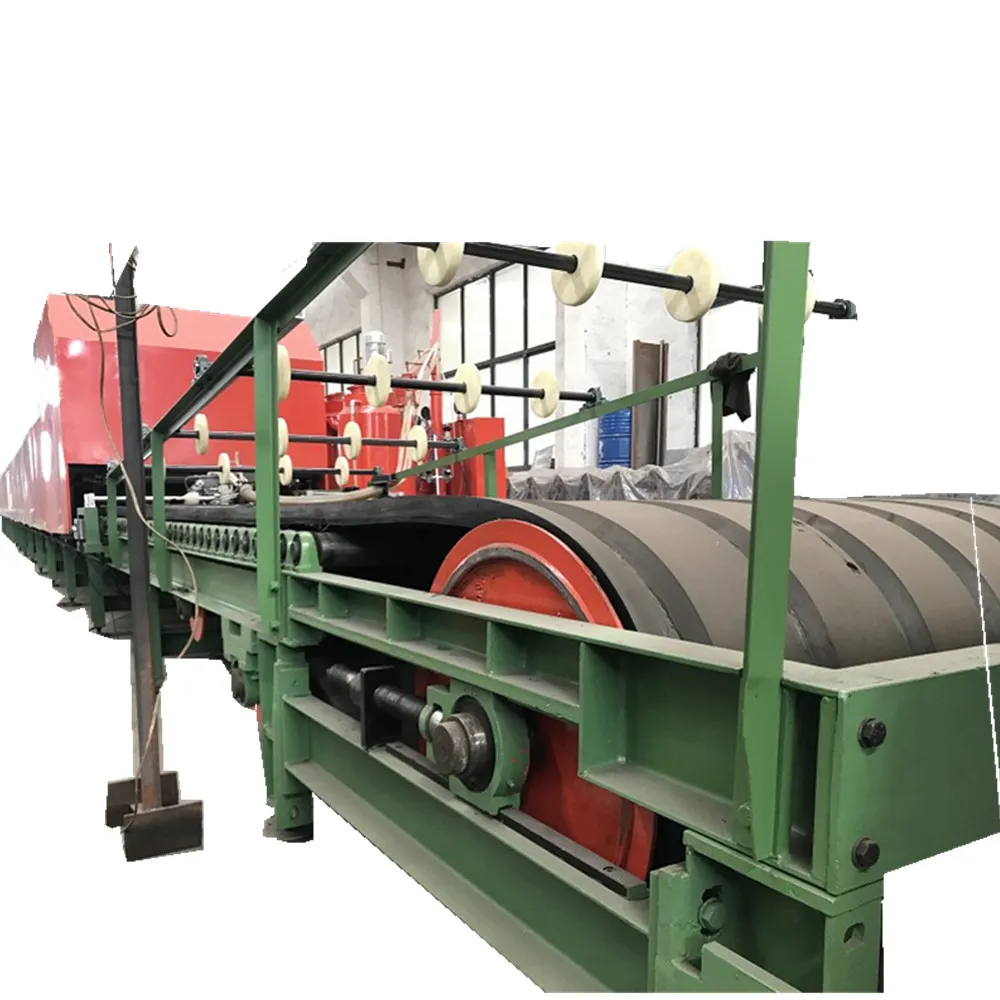
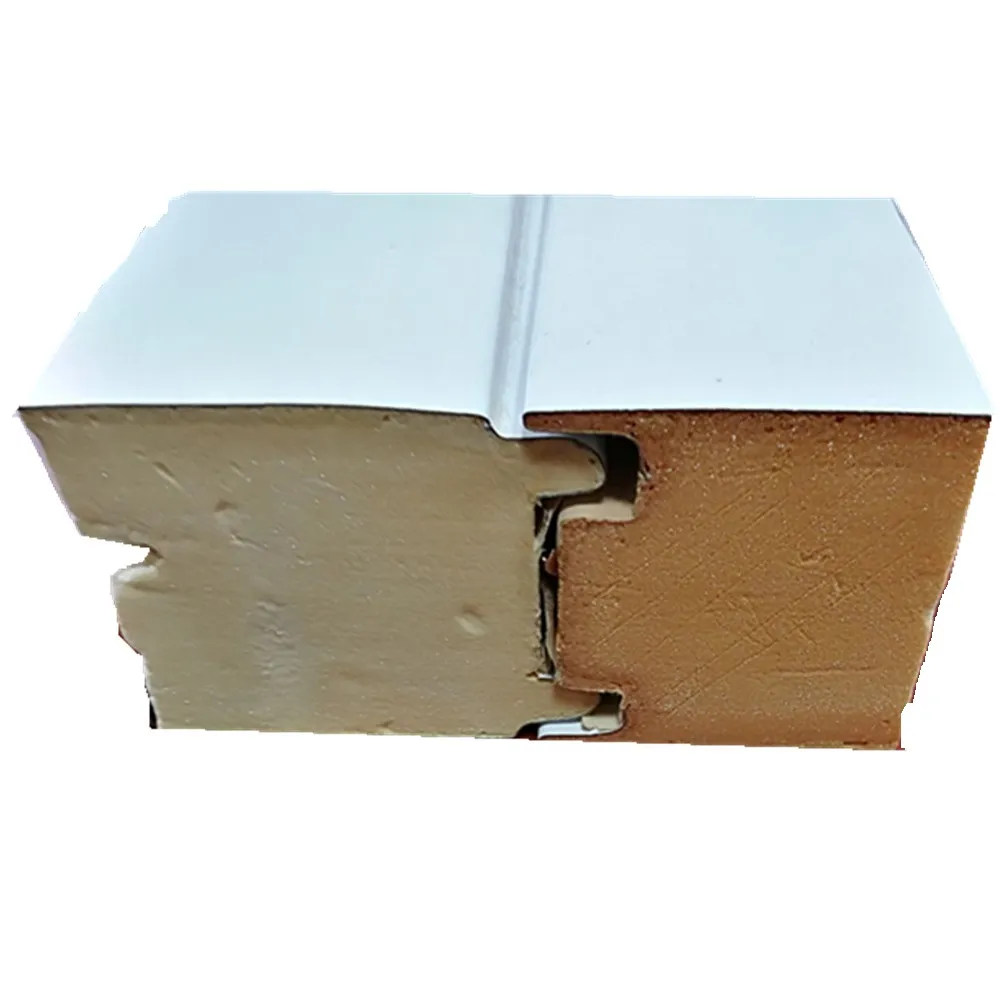
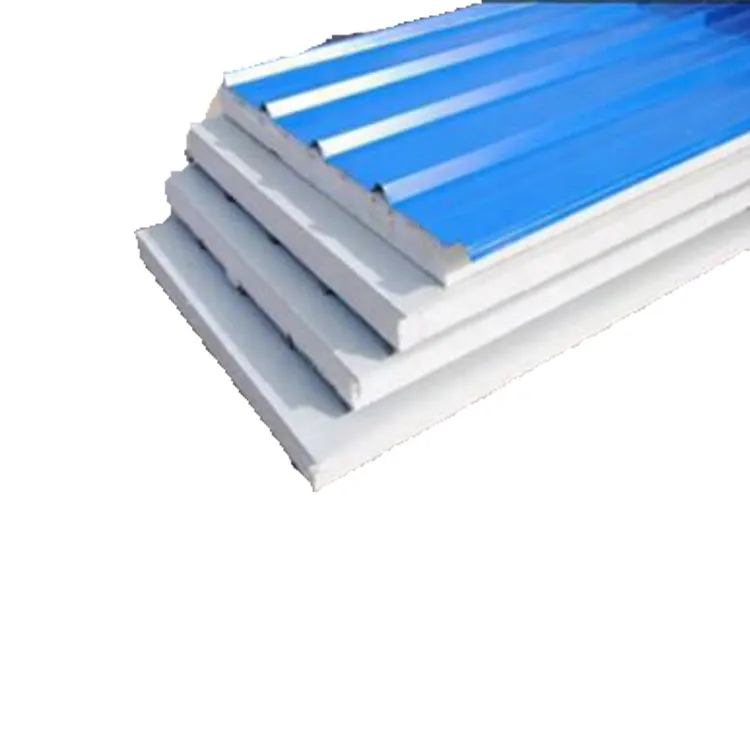

About EPS/PUR Sandwich Panel Automatic Production Lines
Continuous automatic EPS/PUR sandwich panel production lines represent the pinnacle of automated building envelope manufacturing, combining roll forming technology with chemical polyurethane reaction injection and continuous thermal lamination. The line transforms raw coils of prepainted galvanized steel and liquid polyol/isocyanate chemicals (or rigid pre-cut EPS foam slabs) into finished, structural insulated composite panels ready for immediate installation.
The production sequence begins with two independent decoiling and leveling stations feeding top and bottom steel facings into dedicated roll forming machines to profile overlapping corrugated roof ribs or architectural concealed-fastener tongue-and-groove wall joints. In PUR/PIR mode, high-pressure mixing heads oscillate across the bottom steel sheet, dispensing a precisely metered liquid chemical blend that expands rapidly into rigid closed-cell foam. In EPS mode, automated feeders insert foam blocks while multi-head sprayers apply structural polyurethane adhesive.
The sandwich core then enters a continuous double-caterpillar laminating press—typically 24 to 36 meters in length—featuring precision-machined steel slats heated to 40°C–70°C via circulating oil or hot air. The caterpillar maintains uniform thickness (40 mm to 200 mm) and exerts calibrated pressure during foam curing, ensuring high bond strength and flat panel surfaces without bubbling or delamination.
Downstream equipment includes a synchronized servo flying bandsaw or circular saw that tracks moving panels, cutting programmed lengths (up to 16 meters) without stopping the line, followed by automated turnover cooling conveyors, vacuum suction stackers, and stretch-wrapping units.
These turnkey production lines supply global manufacturers of refrigerated cold storage warehouses, pharmaceutical cleanrooms, airport hangars, modular temporary buildings, and energy-efficient industrial workshops.
Applications
Cold-Chain Logistics & Controlled-Atmosphere Freezers
Continuous PUR/PIR sandwich panel lines produce thick airtight panels with thermal conductivity under 0.022 W/m·K, delivering vapor-sealed thermal barriers for deep-freeze logistics and food processing facilities.
Industrial Logistics Hubs & Heavy-Duty Factories
High-speed automated production of 950 mm and 1150 mm insulated composite panels enables fast-track enclosed roofing and cladding across high-bay distribution centers and heavy manufacturing facilities.
Pharmaceutical Laboratories & Semiconductor Cleanrooms
High-precision continuous lines produce flush-jointed insulated sandwich partition and ceiling panels, offering non-shedding surfaces, chemical washdown resistance, and airtight seals for contamination-controlled manufacturing.
Commercial Office Facades & Architectural Envelopes
Dual caterpillar laminators manufacture concealed-fastener architectural sandwich panels with flat or microrib finishes, creating aesthetic, energy-saving exterior facades for modern corporate offices and exhibition pavilions.
Agricultural Livestock Barns & Post-Harvest Storage
Economical continuous EPS and PUR sandwich panel production supplies durable, anti-corrosive, thermal-regulating composite panels for poultry housing, livestock barns, and climate-controlled grain silos.
Technical Overview
| Parameter | Information |
|---|---|
| Production Line Type | Continuous automatic EPS & PUR/PIR composite sandwich panel line |
| Applicable Core Materials | Polyurethane (PUR), Polyisocyanurate (PIR) & Expanded Polystyrene (EPS) |
| Panel Thickness Range | 40 mm – 200 mm (optional heavy cold room up to 250 mm) |
| Effective Panel Width | 950 mm / 980 mm (roof) / 950 mm / 1000 mm / 1150 mm (wall) |
| Production Line Speed | 3.0 – 8.0 m/min (infinitely variable, frequency controlled) |
| Caterpillar Press Length | 24.0 – 36.0 meters (hardened steel slats with thermal oil heating) |
| Upper & Lower Steel Coil | 0.40 mm – 0.80 mm prepainted galvanized steel (PPGI / PPGL) |
| Foaming Injection System | High-pressure metering unit (100–250 bar) with multi-axis pouring arm |
| Cut-off System | Synchronized servo flying band-saw / circular disc saw (precision ±2 mm) |
| Line Automation & Control | Master Siemens S7-1500 PLC + Central touch-screen HMI console |
Related Solutions
Sandwich Panel Production Solution
Continuous EPS and rock-wool sandwich line. Example below: 1220 mm feed, 19 stan…
Insulated Panel Building Solution
Metal sandwich for roofs and walls starts from the core. The example below is a…
Heavy Coil Handling Solution
Coil infeed is a weight class plus a drive: manual expand, electric expand with…
Wall Cladding Roll Forming Solution
Horizontal hanging cladding line, 300 mm feed. Narrow side-punch wall panel is a…
Metal Roofing & Wall Panel Roll Forming Solution
Trapezoidal / IBR, standing-seam, corrugated or glazed-tile roof and wall panel…
Decorative Embossed Metal Panel Solution
Embossing is a pattern roll pair on a dedicated host or as a station on a panel…
Related Information

Continuous PU & Rock Wool Sandwich Panel Production Line: Machine Composition, Heating & Output Calculation
PU sandwich panel machine, rock wool panel production line, PIR sandwich panel c…
Read More
Roll Forming Line Speed: Output Factors & Production Capacity
How fast does a roll forming line run? Understand line speed factors, calculate…
Read More
Roll Forming Machine Control Systems: PLC, HMI and Encoder Integration
How do PLC, HMI, VFD and encoders work together on a roll forming line? A practi…
Read More
Roll Forming Decoiler Types: Manual, Hydraulic and Double-Head Guide
Manual vs hydraulic vs double-head decoilers — capacity, safety, price, and how…
Read More
Industry 4.0 on the Line: Data, Sensors and Predictive Maintenance
A modern roll forming line talks to the network. How sensors, OEE dashboards and…
Read More
Roll Forming Machine Price Guide: Cost Factors, Ranges and How to Get Accurate Quotes (2026)
Cost factors that affect roll forming machine pricing and how B2B buyers can req…
Read More
FAQ
Can a single production line produce both EPS and PUR/PIR sandwich panels?
Yes, 2-in-1 combo continuous lines are equipped with both an automated EPS block feeding table with dual-component glue sprayers and a high-pressure polyurethane (PUR/PIR) liquid injection foaming system with an oscillating pouring arm. Operators can switch between EPS and PUR production modes via the master PLC touch console.
What is the function and recommended length of the continuous caterpillar laminating press?
The double-caterpillar press provides uniform heated containment while the polyurethane foam expands and chemically cures under pressure. For production line speeds of 4 to 8 m/min, caterpillar lengths of 24 to 36 meters are required to guarantee sufficient curing dwell time, preventing post-expansion blisters or thickness deviations.
What foam densities and insulation thicknesses can the production line process?
The line produces panel thicknesses from 40 mm to 200 mm (with optional 250 mm for deep-freeze storage). Rigid PUR/PIR foam core density is maintained at 38 to 45 kg/m³ with closed-cell content exceeding 92%, while EPS core blocks typically range from 14 to 20 kg/m³.
How does the synchronized flying cut-off saw achieve clean cuts without stopping the line?
A servo-driven traveling carriage synchronizes its forward motion with the continuous panel line speed with sub-millimeter precision. High-speed disc saws or pneumatic band-saws execute transverse cutting while moving with the panel, producing square, burr-free cuts without interrupting continuous upstream foaming.
What heating system is used to maintain caterpillar temperature?
The double-caterpillar slats are heated using closed-loop circulating thermal oil or high-efficiency hot-air duct systems. Multi-zone PID temperature controllers maintain slat surfaces between 40°C and 70°C (±2°C), ensuring optimal polyurethane curing kinetics regardless of ambient factory temperature.
What daily production capacity and factory space are required for a continuous line?
A continuous sandwich panel line typically runs at 4–8 m/min, yielding 1,800 to 3,500 square meters per 8-hour shift. The complete equipment layout spans approximately 100 to 140 meters in length and 12 to 15 meters in width, requiring a clear factory bay height of at least 6.5 meters.
What critical utility supplies must be prepared before commissioning a sandwich panel line?
Buyers must provide three-phase electrical power (typically 120–180 kW connected load), an industrial compressed air supply (0.7–0.8 MPa, 2.0 m³/min clean dry air), a closed-loop water cooling tower for the hydraulic unit and foaming pumps, and raw material chemical storage tanks with temperature control.