
- Tuo AI

- Live

- My Account
- Shopping Cart
- Inquiry Basket
- Contact Us
- Back to Top




Highway Guardrail Roll Forming Machines
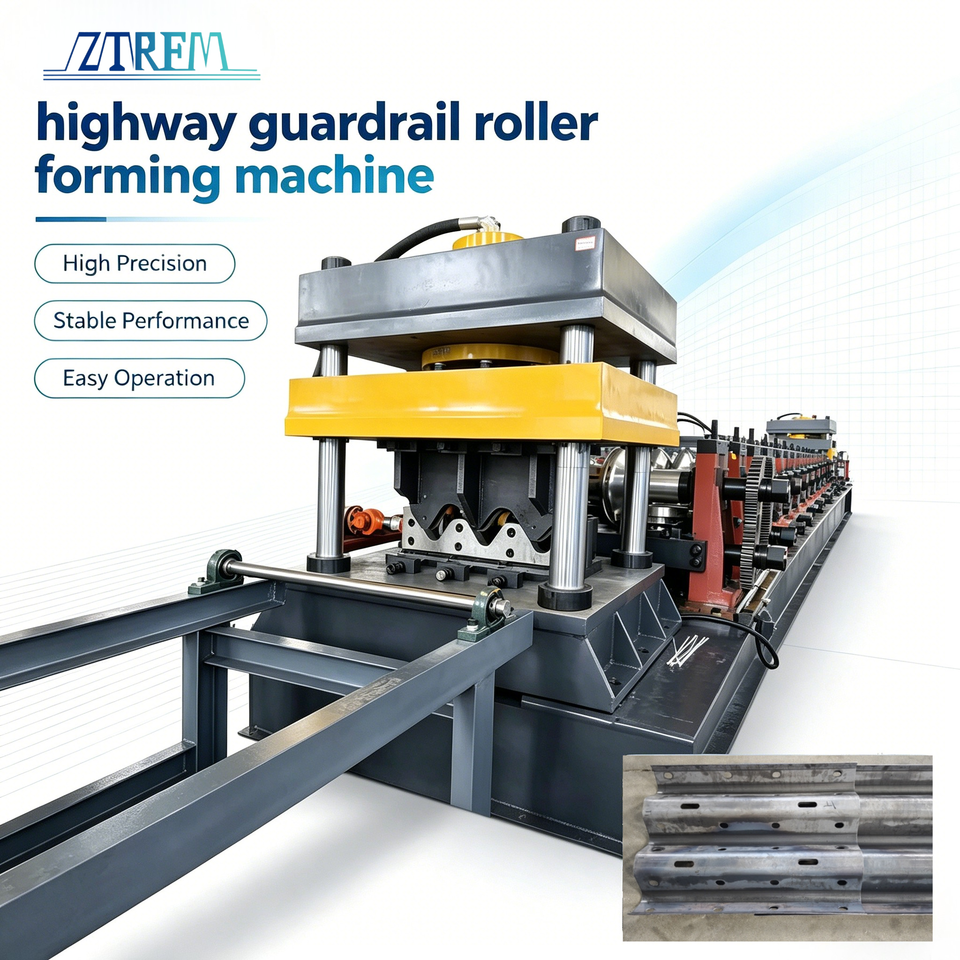
Highway guardrail roll forming machines produce heavy-duty W-beam (2-wave) and Thrie-beam (3-wave) steel crash barriers for expressways, bridges, and mountain highway perimeters. Engineered to cold-form thick structural steel coils (2.5 mm to 4.2 mm thick, Q235B/Q355B or ASTM A1011 Grade 50), these high-tonnage lines feature independent gearbox-driven forming stands, heavy-duty hydraulic pre-punching presses for splice bolt hole matrices, and contoured hydraulic cut-off shears. Compliant with international roadway safety standards AASHTO M180 (USA) and EN 1317 (Europe), these production systems deliver high structural impact strength and precise joint alignment. Explore verified equipment specifications, tooling layouts, and factory direct solutions below.
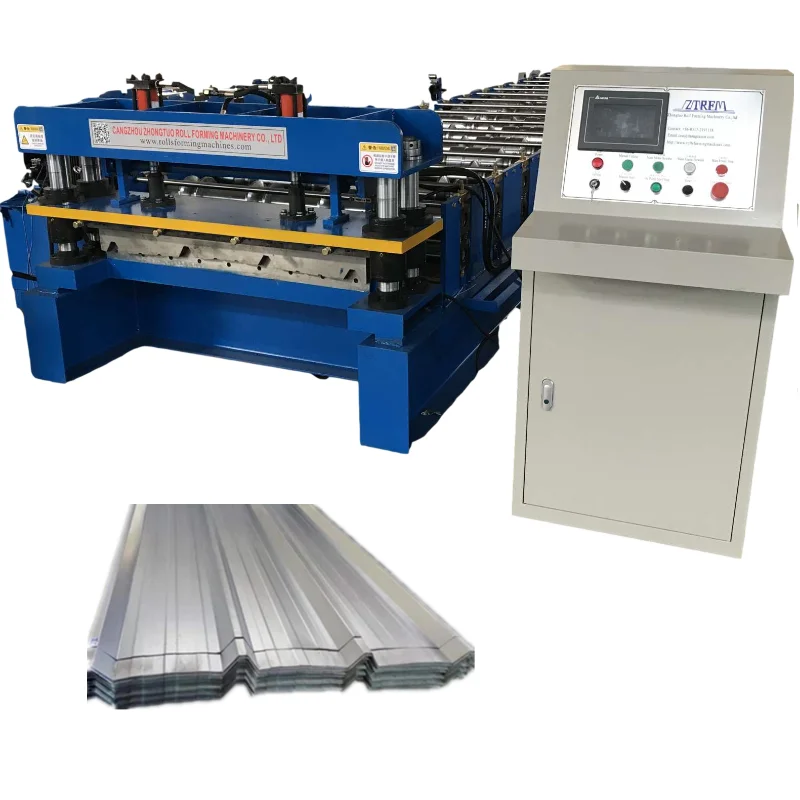 Portable Trapezoidal 4 Rib Metal Roof Tile Making Machine Tr4 Ibr
- Customizable
$16,950.00
MOQ: 1
 IBR Trapezoidal Roofing Sheet R Panel Roll Forming Machine
- Customizable
$16,385.00
MOQ: 1
 High Speed Highway Guardrail Roll Forming Machine Production Line
- ztrfm-high guardrail
$53,000.00
MOQ: 1
 High Speed Highway Guardrail Roll Forming Machine for W Beam Production
- 380v 50hz 3
$53,000.00
MOQ: 1
 Highway Guardrail Roll Forming Machine with Cold Bending for Barrier and C Pillar
- ZTRFM-highway guarddrail
$85,000.00
MOQ: 1
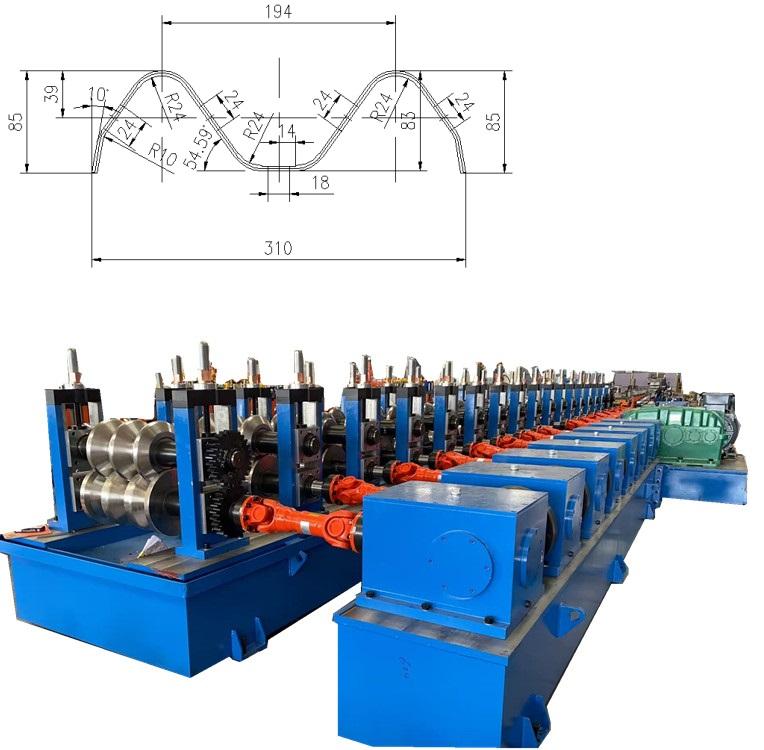 Two Wave and Three Wave Guardrail Profile Rolling Forming Machine
- Customizable
$96,050.00
MOQ: 1
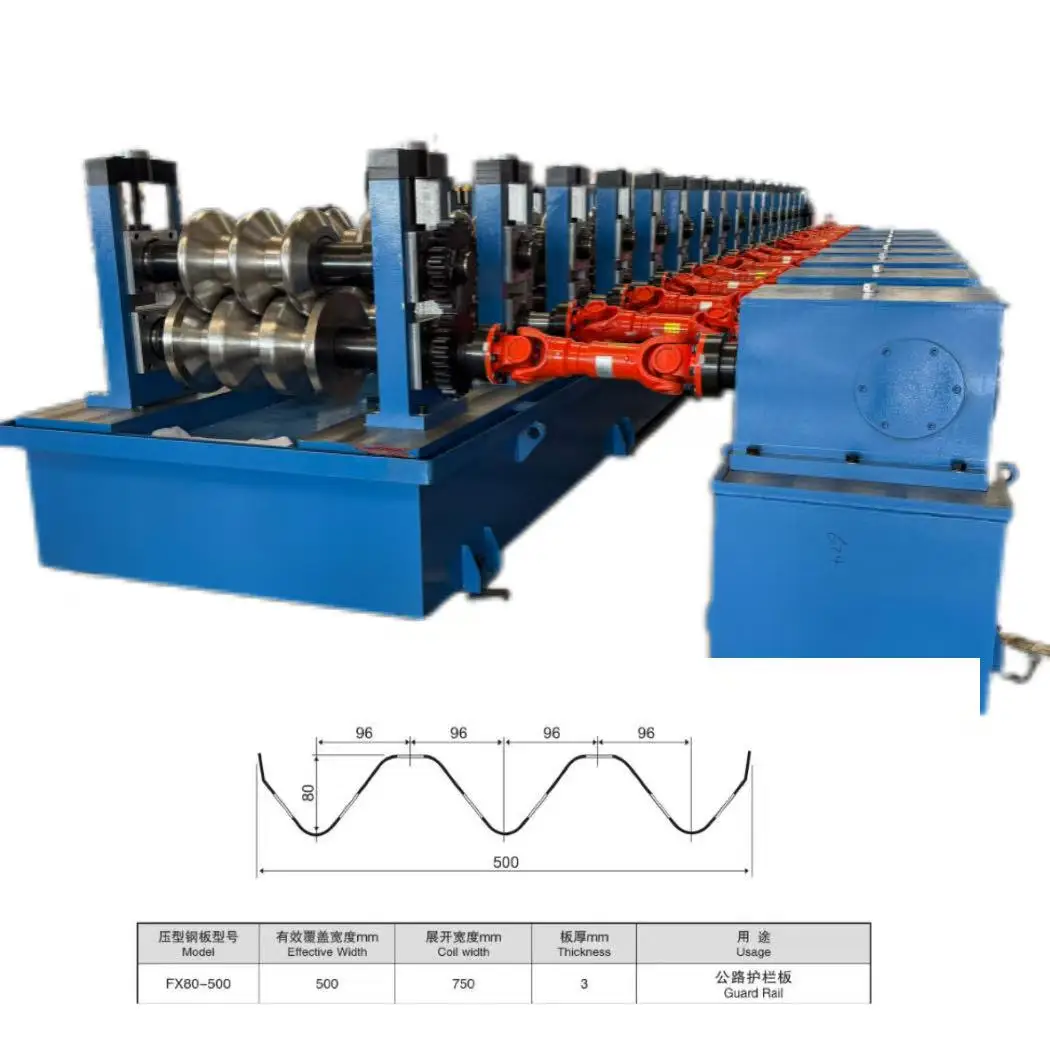 Highway Guardrail Three Waves Cold Roll Forming Machine
- Customizable
$96,050.00
MOQ: 1
 Automatic Highway Guardrail Cold Roll Forming Machine
- 12 m/minute.
$87,000.00
MOQ: 1
 Robust Curved Guardrail Roll Forming Machine for Highway
- 2.5 mm to 4.0mm.
$87,000.00
MOQ: 1
 Industrial Highway Safety Barrier Roll Former for High Volume
- High Precision
$40,000.00
MOQ: 1
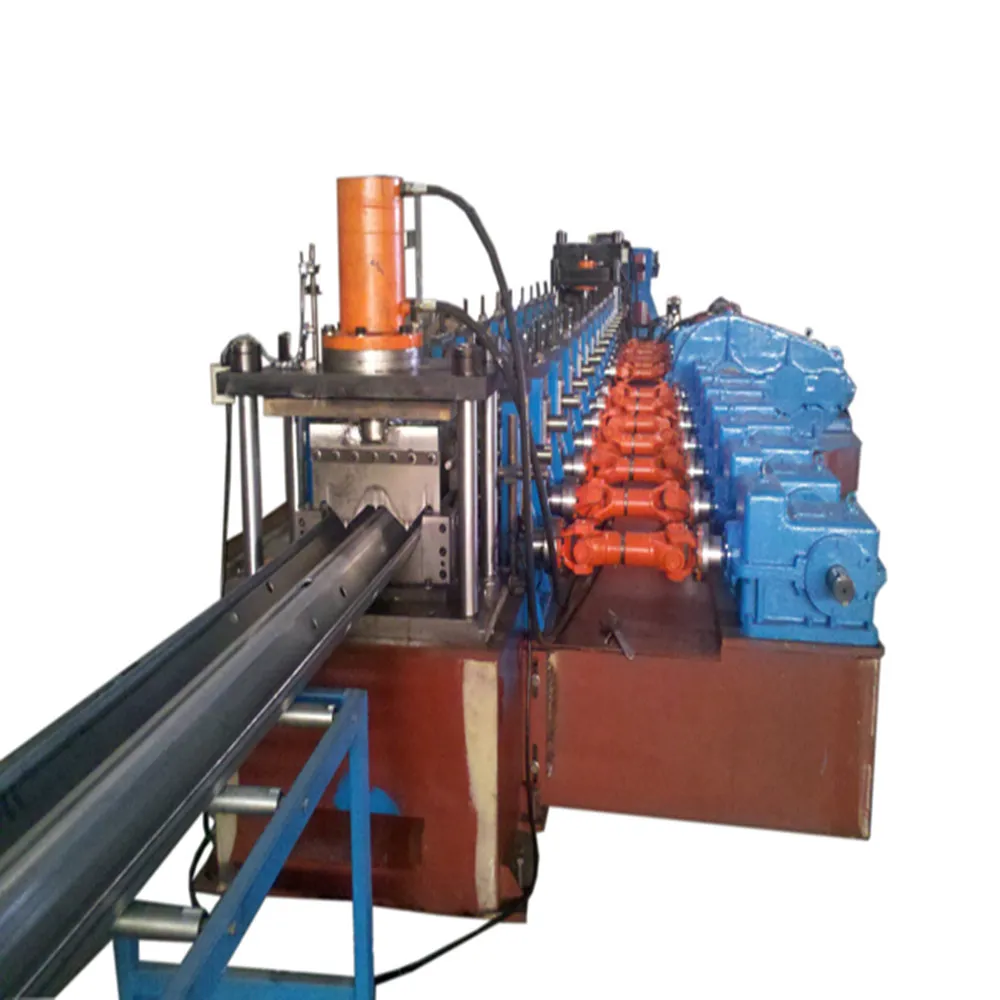 Highway Guardrail Roll Forming Machine Steel Production Line
- zt45-23+30KW
$76,400.00
MOQ: 1
 Two Waves Three Waves Highway Guardrail Roll Forming Machine W
- ZT-300+ZTAC
$25,000.00
MOQ: 1
 Highway Guardrail Roll Forming Machine Two Waves Three Waves
- two waves,3 waves+customized
$100,000.00
MOQ: 1

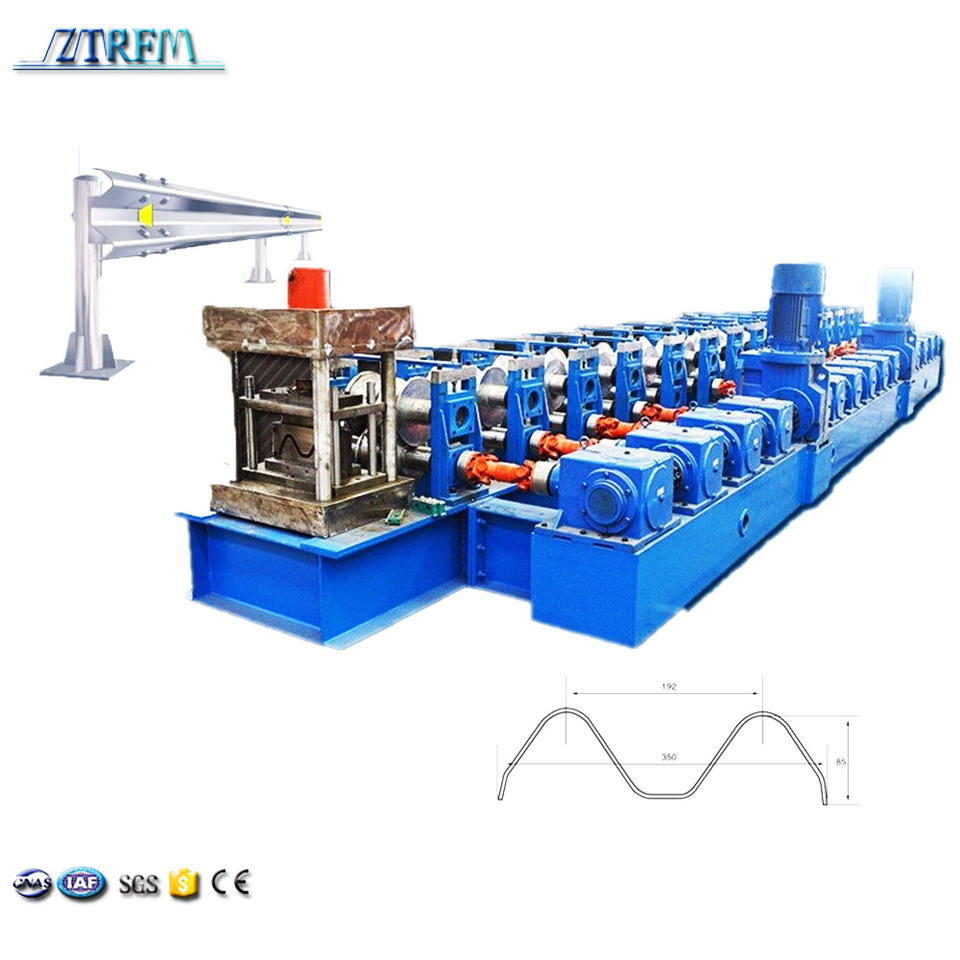
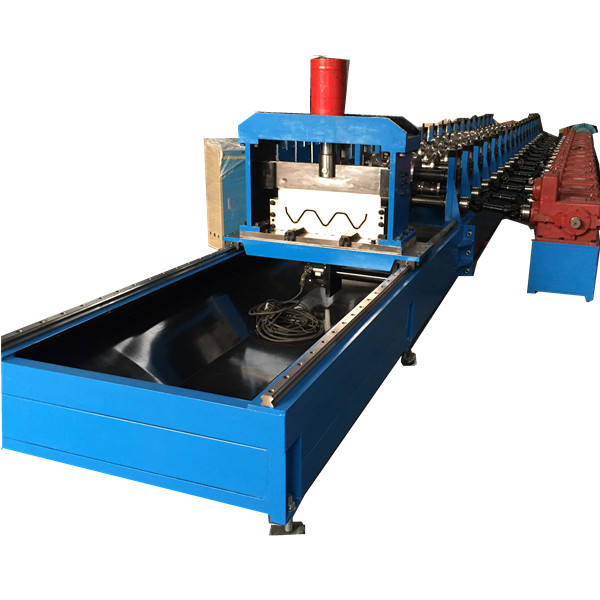


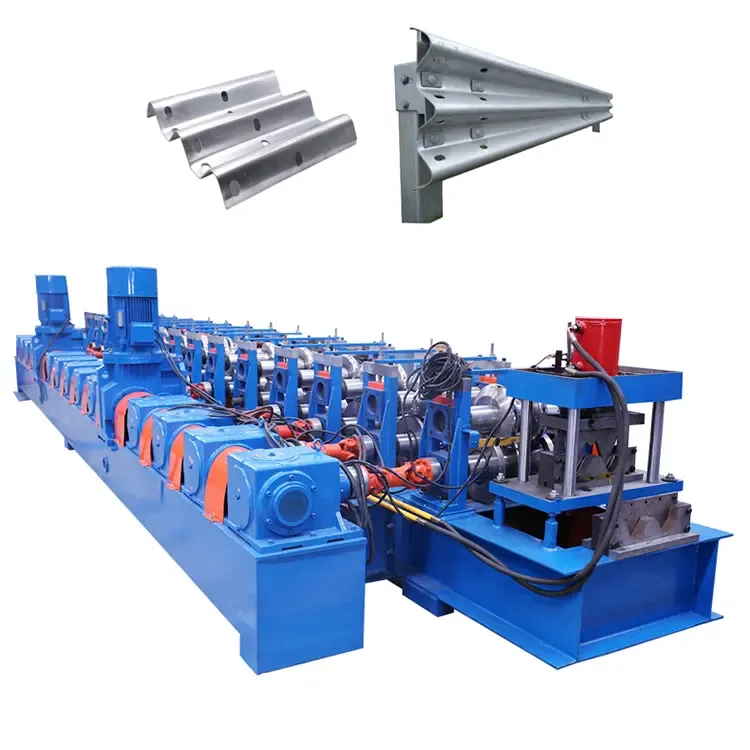
About Highway Guardrail Roll Forming Machines
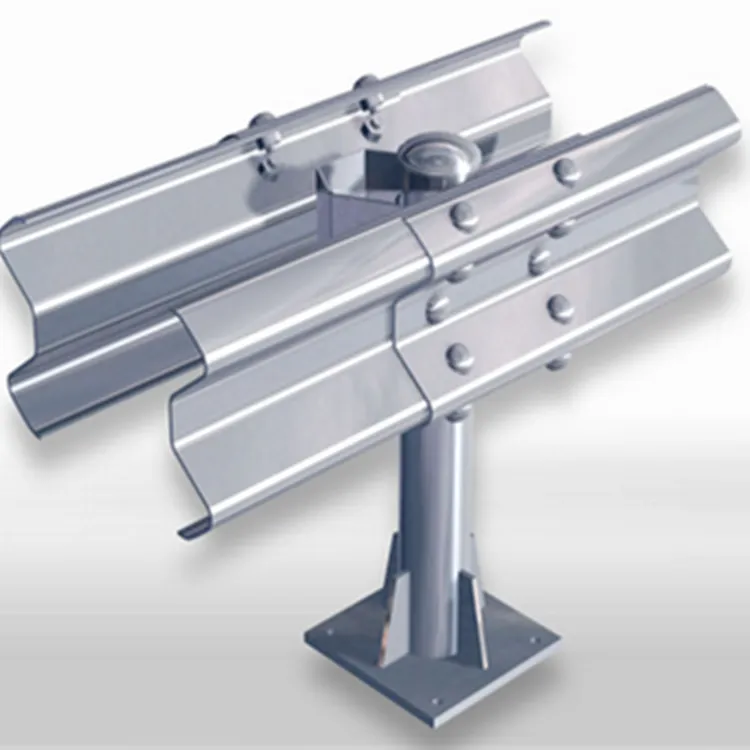
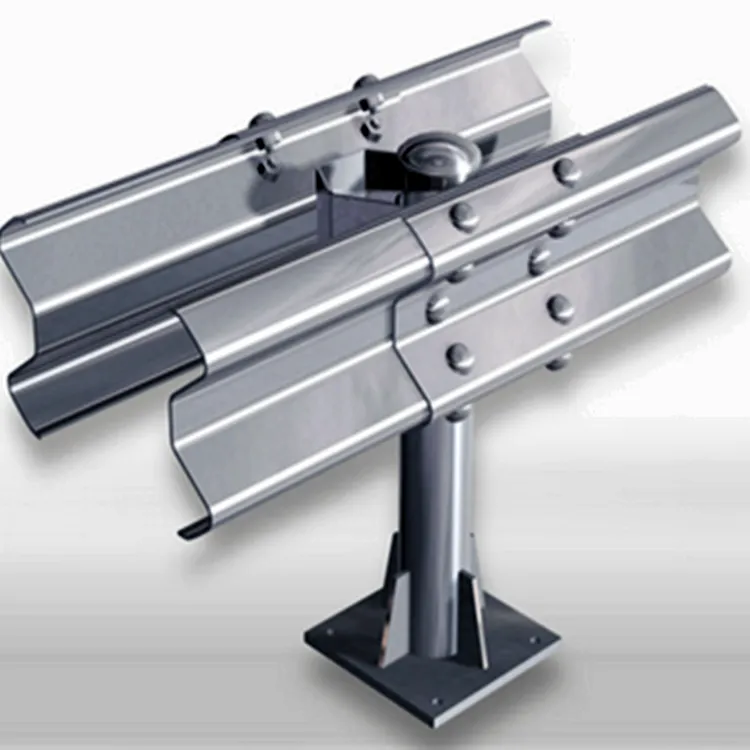
Highway guardrail roll forming machines represent heavy-duty industrial production lines dedicated to civil transportation safety infrastructure, expressways, and urban road barrier manufacturing. Cold-rolled guardrail beams absorb vehicle impact energy through controlled plastic deformation, redirecting errant vehicles along the roadway while preventing crossover into oncoming lanes or departure over bridge decks and cliffs.
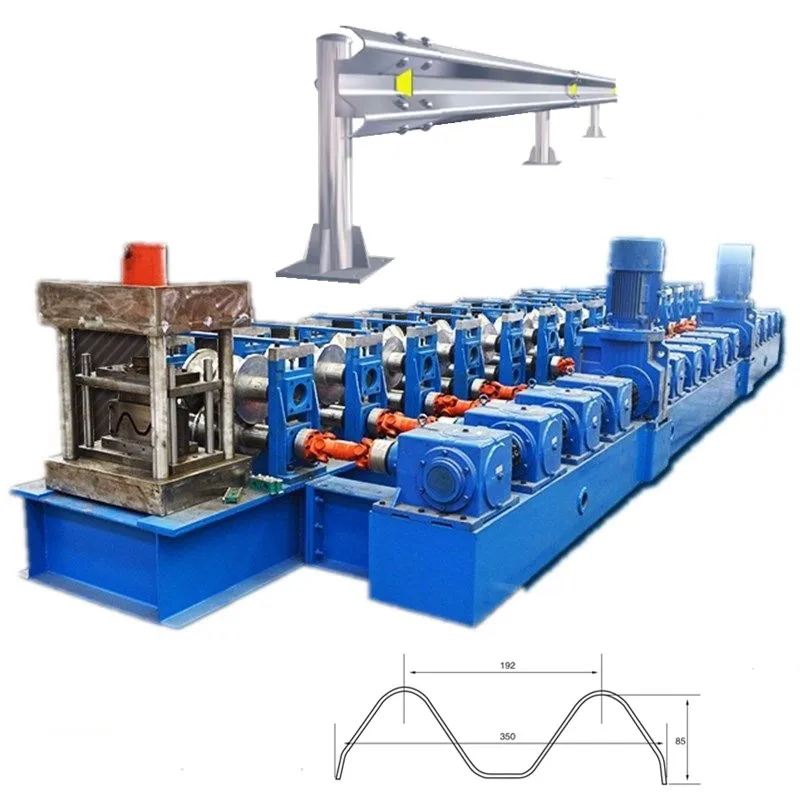
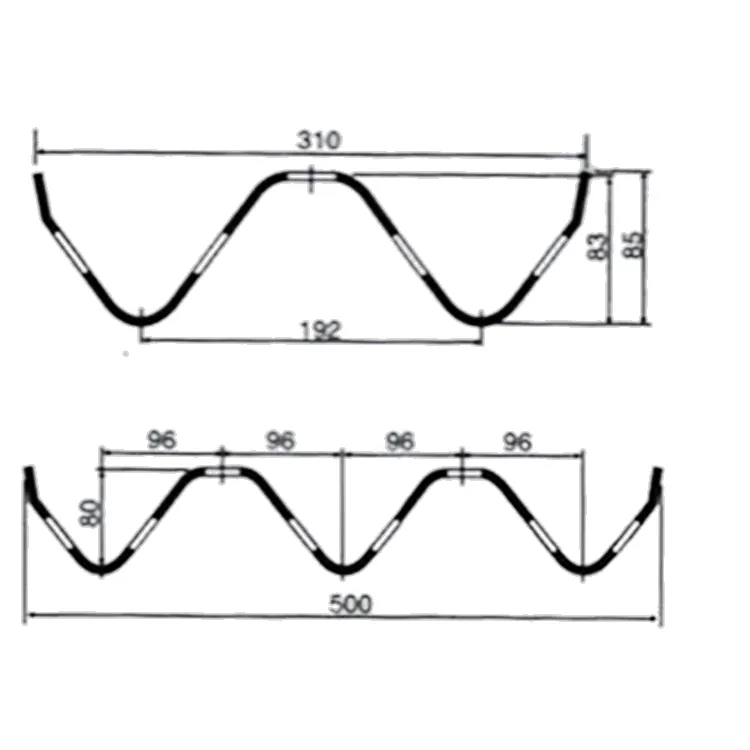
Primary profile specifications include the classic 2-wave W-beam (312 mm cross-section width × 83 mm wave depth × 4318 mm standard length) and the heavy-duty 3-wave Thrie-beam (506 mm cross-section width × 83 mm wave depth), which provides increased vertical capture height for high-center-of-gravity trucks and buses. Steel raw material predominantly features hot-rolled pickled and oiled (HRPO) or pre-galvanized high-yield steel coils with thicknesses spanning 2.67 mm (12-gauge), 3.43 mm (10-gauge), and up to 4.0 mm. Finished components achieve strict compliance with international barrier impact crash test standards (AASHTO M180 Class A/B and EN 1317 containment levels N2, H1, H2).
The heavy production line integrates a 10-to-15-ton hydraulic uncoiler with coil car, a 7-roll heavy-duty strip leveler with hydraulic pinch rolls, a high-tonnage hydraulic pre-punching press with progressive hardened tool steel dies (punching splice bolt slots, post mounting slots, and terminal holes), 16 to 22 independent cast-iron forming stands with independent drive gearboxes and universal joint cardan shafts, and a heavy-duty hydraulic profile shear with Cr12MoV contoured blades running at production speeds of 10 to 18 m/min.
Highway Guardrail Roll Forming Machines Profiles

W-beam 2-wave
Highway guardrail example lines often use ~3.0 mm strip; posts are a different h…
View Profile
Applications
Interstate Highway Median W-Beam Crash Barriers
Continuous hot-dip galvanized cold-rolled W-beam steel guardrail panels mounted onto median posts, preventing highway vehicle crossovers on multi-lane expressways.
Mountainous Expressway Thrie-Beam Curve Barriers
Heavy-duty 3-wave Thrie-beam galvanized steel crash barriers installed along cliffside expressway curves, providing elevated capture height for heavy freight trucks.
Bridge & Elevated Viaduct Transition Guardrails
Continuous galvanized steel W-beam to Thrie-beam transition barriers bolted to concrete bridge parapet walls and expansion joints, preventing vehicle vaulting.
Automotive Proving Ground & Circuit Safety Barriers
Multi-tier galvanized steel W-beam crash rails installed along high-speed automotive test proving grounds and race track run-off zones for impact absorption.
Industrial Logistics Freight Perimeter Crash Barriers
Heavy-duty galvanized steel W-beam safety barriers protecting pedestrian walkways, weighbridges, and terminal gates from heavy logistics truck collision damage.
Technical Overview
| Parameter | Information |
|---|---|
| Machine / Product Family | Heavy-duty highway W-beam & Thrie-beam crash barrier roll forming line |
| Applicable Coil Materials | Hot-rolled pickled (HRPO), pre-galvanized steel (Q235B, Q355B, ASTM A1011) |
| Material Thickness Range | 2.50 mm – 4.20 mm (12-gauge to 8-gauge heavy structural strip) |
| Standard Beam Widths | W-beam: 312 mm (from 482 mm coil); Thrie-beam: 506 mm (from 750 mm coil) |
| Profile Depth / Height | 83 mm wave depth (conforming to AASHTO M180 standard geometry) |
| Punching System & Press | 120T – 160T hydraulic pre-punching press with progressive splice slot dies |
| Forming Stations & Tooling | 16 – 22 independent cast-iron stands (solid GCr15 / Cr12MoV, HRC 58–62) |
| Drive & Transmission System | Individual heavy-duty gearboxes with cardan universal joint shaft drive |
| Cutting System & Shear Blade | Heavy-duty hydraulic profile shear with Cr12MoV wave contour blades |
| Line Speed & Length Accuracy | 10 – 18 m/min production speed; cut-to-length tolerance ±1.5 mm |
Related Solutions
Highway W-Beam Guardrail Roll Forming Line
Full line for W-beam guardrail (thrie-beam optional). In-line punching, galvaniz…
Guardrail and Fence Roll Forming Solution
Highway W-beam guardrail line with 2-wave / 3-wave swap modules. Example: 3.0 mm…
Bridge Railing and Pedestrian Guardrail System
Roll forming and fabrication solution for bridge and pedestrian railing posts an…
Perimeter Fencing Production Solution
A fence search is a picket and rail family, not one mill. Square + profile palis…
Heavy Coil Handling Solution
Coil infeed is a weight class plus a drive: manual expand, electric expand with…
Metal Sheet Processing Solution
Blanking and cut-off around a roll former is a shear class: flying (tracking) sh…
Related Information

Guardrail Roll Forming Machine: W-Beam and Thrie-Beam Highway Barrier Production
W-beam vs thrie-beam guardrail profiles, AASHTO M180 specs, machine configuratio…
Read More
Guardrail W Beam Roll Forming Machine: Specs, Line Modules & Buying Guide
guardrail w beam roll forming machine, highway guardrail machine, W beam guardra…
Read More
Highway Guardrail Roll Forming Machine: Specifications & Price Explained
highway guardrail roll forming machine specifications", "guardrail machine price…
Read More
Highway Guardrail Standards: AASHTO M180 vs EN 1317 Roll Forming Specs
highway guardrail standards aashto m180 en 1317 roll forming specs
Read More
Cold Formed Steel vs Hot Rolled Steel: What Roll Forming Buyers Need to Know
Yield strength, ductility, surface finish, tolerances — a practical comparison o…
Read More
High-Strength Steel (HSLA) in Roll Forming
High-strength low-alloy steel lets you build lighter structures—but it fights ba…
Read More
FAQ
What is the difference between W-beam (2-wave) and Thrie-beam (3-wave) guardrail profiles?
W-beam is the standard 2-wave profile (312 mm wide) used globally along highways and medians for passenger vehicle containment. Thrie-beam is a 3-wave profile (506 mm wide) providing higher vertical barrier coverage and torsional resistance, widely installed along sharp curves, bridge approaches, and heavy-truck transit routes.
Can one guardrail roll forming machine produce both W-beam and Thrie-beam profiles?
Yes. Manufacturers utilize interchangeable cassette-type roll formers or dual-purpose machines where common roller stands share interchangeable roller sets or movable cassettes, allowing quick changeover between W-beam and Thrie-beam without purchasing a second machine bed.
What international crash test standards must roll-formed guardrail panels satisfy?
Panels must strictly comply with AASHTO M180 (Class A: 2.67 mm / 12-gauge; Class B: 3.43 mm / 10-gauge; Type I and Type II zinc coatings) and European standard EN 1317 (containment levels N2, H1, H2). Key parameters include steel yield strength (≥345 MPa), elongation (≥12%), and zinc mass (≥550 g/m²).
What material grades and coil thicknesses can guardrail roll forming machines process?
Standard lines process heavy structural steel coils from 2.5 mm to 4.2 mm thick (12-gauge to 8-gauge), utilizing hot-rolled pickled and oiled steel (Q235B, Q355B, ASTM A1011 Grade 50) for post-forming hot-dip galvanizing, or pre-galvanized coils with heavy zinc coatings.
How are splice bolt holes and post mounting slots punched accurately during production?
A high-tonnage hydraulic pre-punching station (120T to 160T) equipped with Cr12MoV progressive dies punches standard 8-hole or 16-hole end splice matrices and middle oblong post slots. An optical rotary encoder and PLC ensure hole pitch accuracy within ±1.0 mm.
Why do guardrail roll forming machines utilize independent gearboxes and universal joint drives?
Forming 3.0 to 4.0 mm high-strength steel requires massive torque. Independent cast-iron gearboxes and heavy cardan universal joints distribute motor power directly to each roller shaft, eliminating chain stretch, gear chatter, and roller slippage common to chain-driven machines.
What critical features should buyers verify when sourcing a highway guardrail machine?
Buyers should verify maximum sheet thickness capability (up to 4.0 mm), roller shaft diameter (Φ95–110 mm solid 40Cr steel), roller material (GCr15 bearing steel or Cr12MoV vacuum hardened), uncoiler capacity (10T minimum), and hydraulic profile shear blade alignment.