

















The Box Rib HCF Wall Panel Roll Forming Machine is designed to manufacture architectural metal wall panels with horizontal concealed fastening systems. These panels combine pronounced rib patterns with a clean exterior surface, making them suitable for commercial, industrial, institutional, and residential buildings.

The HCF design uses an interlocking sidelap to conceal the fasteners, creating a continuous appearance across the wall. Depending on the panel design, manufacturers can use either a fastening flange without clips or a clip-fastened configuration. The clip option also allows the panel system to accommodate thermal expansion and contraction more effectively.
Box Rib HCF profiles can be developed in different rib arrangements, including 2aC, 2C, 2wC, and 3C configurations. With designs ranging from one to four ribs, architects can achieve different combinations of lines, shadows, and visual depth while maintaining the practical benefits of roll-formed metal cladding.


Box Rib HCF Profiles and Architectural Design
Box Rib wall panels offer considerably more design flexibility than a single fixed rib pattern. The profile can incorporate different rib spacing arrangements, allowing designers to create regular façades or combine several panel patterns to produce a more distinctive exterior.
In architectural metal wall panel systems, Box Rib profiles are also associated with the broader concept of precision-forming profiles. Typical Box Rib designs use a 1-3/8-inch panel depth and approximately 12-inch nominal width, while the rib geometry can vary according to the selected profile. The four Box Rib options use pronounced rib formations with approximately 87-degree rib angles, creating clear vertical lines and shadows across the building façade.
For projects requiring additional visual variation, different Box Rib profiles can be combined on the same wall. This approach allows designers to alternate ribs and valleys rather than using one repetitive pattern across the entire surface.
The wider Precision Series concept also includes other profile families. The original HWP profile has a depth of approximately 7/8 inch and is available in nominal 12-inch and 16-inch widths. The Highline family includes seven profiles with a 1-3/8-inch depth and 12-inch or 16-inch nominal widths. The Box Rib family contains four profiles with a 1-3/8-inch depth and approximately 12-inch nominal width.
This variety gives building designers more freedom when developing exterior wall patterns. Furthermore, related profiles can be evaluated for compatible connections where the project requires multiple visual patterns.


Customized Box Rib Wall Panel Roll Forming Machine
Because Box Rib panels come in multiple configurations, manufacturers should build the roll forming machine around the actual profile rather than rely on a generic ribbed-panel machine. We have already manufactured many Box Rib wall panel roll forming machines for different panel designs, so we can customize the forming tooling according to the customer’s drawings.
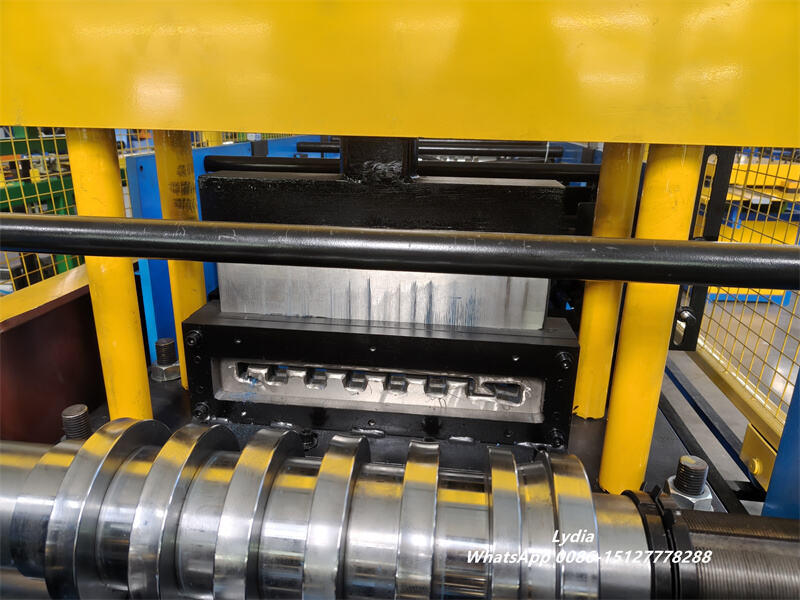
During machine design, our engineers consider the panel width, rib depth, rib spacing, sidelap structure, fastening flange, material thickness, and required production speed. The forming rolls then gradually shape the steel strip through multiple stations until it reaches the final Box Rib geometry.
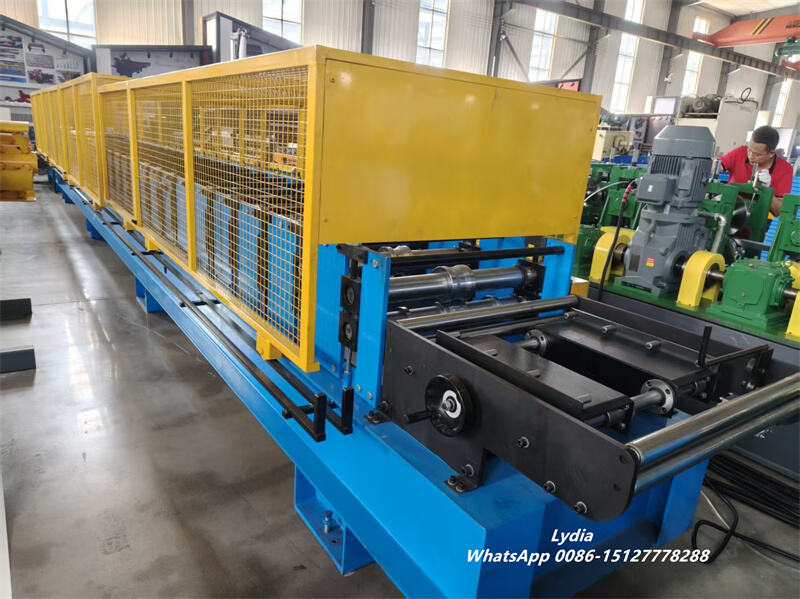
A typical production line contains around 20 forming stations and uses 75 mm solid shafts to support the forming rolls. This rigid shaft arrangement helps maintain stable roll positioning during continuous operation. At the same time, the forming passes distribute deformation across several stations instead of forcing the material into its final shape in only a few steps.
We can also design different tooling arrangements for customers who need several Box Rib profiles. Depending on how closely the profiles are related, the solution may use dedicated tooling or an interchangeable roll-forming configuration.
The machine can process PPGI and PPGL coils, typically within a thickness range of 0.3–0.7 mm. However, we can verify the material and tooling configuration against the customer’s actual coil specifications before production.

Concealed Fastener Panel Production and Applications
The main advantage of the HCF structure lies in the finished appearance. Instead of leaving fastening points visibly exposed on the outside of the wall, the interlocking sidelap helps conceal the fastening system. Therefore, the finished façade presents cleaner and more continuous architectural lines.
The panels can be designed for horizontal or vertical installation, and the recommended production length depends on the project requirements and installation method. For architectural projects using long panels, maintaining accurate profile geometry and consistent sidelap dimensions becomes particularly important.
Some architectural panel systems can also use perforated aluminum versions for specialized applications such as equipment screens or surfaces placed over graphics. The exact material and perforation configuration should be determined according to the project specification.
Box Rib panels can serve many building types, including schools, hospitals, banks, sports facilities, offices, industrial buildings, warehouses, commercial properties, and residential buildings. Their combination of strong rib geometry and concealed fastening makes them particularly useful when the exterior appearance matters as much as practical wall cladding performance.
For installation, Box Rib panels are generally arranged in single-piece runs, either horizontally or vertically. The final panel length should therefore be determined together with the building layout, transportation conditions, and installation requirements.


Box Rib Panel Machine Technical Specifications
The following table shows a typical configuration of our Box Rib concealed fastener wall panel roll forming machine. We can modify the specifications according to the customer’s profile drawing and production requirements.
| Machine Parameter | Typical Specification |
|---|---|
| Machine Type | Box Rib HCF Wall Panel Roll Forming Machine |
| Suitable Material | PPGI / PPGL Coil |
| Material Thickness | 0.3–0.7 mm |
| Coil Width | 600–610 mm |
| Material Yield Strength | Approx. 235 MPa |
| Forming Stations | About 20 |
| Shaft Diameter | 75 mm solid shaft |
| Forming Speed | Up to 20 m/min |
| Main Motor | 7.5 kW |
| Hydraulic Motor | 3 kW |
| Forming Roll Material | No. 45 steel with chrome treatment |
| Cutter Material | CR12 mold steel with quenched treatment |
| Control System | Mitsubishi or Siemens PLC + converter + touchscreen |
| Machine Weight | About 5,000 kg |
| Machine Dimensions | About 10 × 1.0 × 1.5 m |
| Typical Loading | Two machines can be arranged for one 40 GP container |
The electrical system can be configured according to the customer’s local power supply. In addition, we can select the PLC, inverter, electrical components, and hydraulic configuration based on the required production conditions.
Why Choose Our Box Rib Roll Forming Machine?
A successful Box Rib production line needs more than standard roll-forming equipment. The forming rolls must reproduce the rib geometry accurately, while the sidelap and fastening flange must connect correctly during installation. Therefore, we focus on the complete profile rather than only the visible rib shape.
Our experience with multiple Box Rib designs allows us to develop machines for different architectural requirements. Whether the customer needs a standard 12-inch Box Rib profile, a customized rib spacing pattern, a concealed-fastener flange, or a multi-profile production solution, we can design the forming system around the final panel drawing.
The machine combines continuous decoiling, feeding, roll forming, hydraulic cutting, and PLC control into one production line. As a result, it provides a practical solution for manufacturers producing concealed-fastener metal wall panels for architectural and construction projects.
Send us your Box Rib panel drawing, material thickness, coil width, and required production speed. Our engineers can then recommend the appropriate roll forming configuration and tooling design for your project.
FAQ – Box Rib Wall Panel Roll Forming Machine
1. What is a Box Rib Wall Panel Roll Forming Machine?
A Box Rib Wall Panel Roll Forming Machine is a continuous forming system designed to manufacture ribbed metal wall panels with concealed fastening structures. It gradually forms PPGI or PPGL coils into the required Box Rib profile and then cuts the panels to the preset length.
2. What materials can the machine process?
The machine is mainly suitable for PPGI and PPGL steel coils. A typical material thickness range is 0.3–0.7 mm, with a coil width of approximately 600–610 mm. The exact material specifications can be adjusted according to the customer’s panel design.
3. Can you manufacture different Box Rib profiles?
Yes. Customized Box Rib profiles are one of our main capabilities. We have manufactured many concealed-fastener wall panel machines for different rib patterns, widths, depths, sidelap structures, and fastening configurations.
Customers can provide a CAD profile drawing or finished panel sample, and we can design the forming rolls accordingly.
4. Can the machine produce concealed fastener wall panels?
Yes. The forming system can be designed for concealed fastener and interlocking sidelap structures. Depending on the panel design, the machine can produce panels with a fastening flange or a clip-compatible configuration.
5. How fast can the Box Rib panel machine run?
The typical forming speed can reach approximately 20 m/min. However, the actual production speed depends on the panel profile, material thickness, rib complexity, cutting length, and other production requirements.


