





- Tuo AI

- Live

- My Account
- Shopping Cart
- Inquiry Basket
- Contact Us
- Back to Top
Color Coated Steel System > Production Equipment > roof sheet making machine
You can log in to view more discounted prices.Login Now
Shipping fee and delivery date to be negotiated. Chat with supplier now for more details.





The Klip Lok Standing Seam Roofing Sheet Roll Forming Machine is a specialized metal roll forming system designed for manufacturing clip-lock and standing seam roofing panels.
Unlike conventional exposed-fastener roofing sheets, Klip Lok roofing panels are designed with an interlocking connection structure. This type of roofing system is widely used for commercial buildings, industrial factories, warehouses, workshops, agricultural buildings, and other projects where a clean roof appearance and reliable panel connection are important.
The machine uses continuous cold roll forming technology to transform metal coils into finished Klip Lok roofing panels. During production, the metal strip passes through a series of precision forming stations, gradually taking the required profile shape while maintaining consistent dimensions and surface quality.
ZTRFM provides customized roll forming equipment according to the customer's profile drawing, material specifications, required production speed, panel width, thickness, and other technical requirements.
This makes the machine suitable not only for standard Klip Lok profiles but also for customized roofing profiles developed for different regional markets.

Klip Lok, also commonly written as Clip Lock or Clip-Lok, refers to a type of concealed-fixing metal roofing system.
The panel profile is formed with specially designed side edges that allow adjacent panels to interlock or be secured through a concealed fixing system. Because the fasteners can be hidden beneath the panel connection, the finished roof can have a clean and continuous appearance.
Klip Lok roofing panels are commonly selected for:
The exact profile dimensions and connection structure vary according to the roofing system and market requirements. Therefore, profile drawings are important when selecting or designing a Klip Lok roll forming machine.
The machine is specially configured according to the required Klip Lok profile.
The forming rollers gradually shape the metal coil into the finished roofing profile, helping maintain stable dimensions throughout continuous production.
Depending on the customer's requirements, the equipment can be engineered for different:
If you already have a finished roofing panel sample or technical drawing, our engineering team can use it as the basis for machine design.

The machine adopts a continuous forming process.
The general production workflow is:
Decoiling → Feeding → Roll Forming → Measuring → Cutting → Finished Panel Output
After the coil is loaded onto the decoiler, the material enters the feeding section and is gradually formed through multiple roller stations.
The finished panel is then cut automatically according to the preset length.
This continuous process helps reduce manual operations and provides an efficient solution for roofing panel manufacturers.
The quality of the forming rollers directly influences the finished roofing panel.
ZTRFM uses precision-machined forming rollers designed according to the customer's confirmed profile.
The roller system is engineered to provide:
Before production, the profile drawing and key dimensions can be confirmed with the customer to reduce unnecessary adjustment after machine manufacturing.
One of the major advantages of choosing a professional roll forming manufacturer is the ability to customize the equipment.
Klip Lok profiles can vary between different suppliers, regions, and construction standards. A machine designed for one profile should not automatically be assumed to produce another profile.
For this reason, ZTRFM recommends providing one of the following:
Our engineering team can then evaluate the profile and design the corresponding forming roller configuration.
ZTRFM's application-based engineering process covers profile dimensions, material specifications, production capacity, forming process, punching and cutting requirements, factory conditions, and automation requirements. https://www.ztrfm.com/
The Klip Lok roll former can be designed for different metal coil materials according to the customer's requirements.
Common materials include:

Galvanized steel is widely used for roofing applications because of its corrosion-resistant zinc coating.
PPGI provides both corrosion protection and a colored surface finish, making it suitable for architectural roofing applications.
For projects requiring lightweight roofing materials and specific corrosion-resistance characteristics, the machine can also be designed for aluminum coil processing after technical confirmation.
For special materials, customers should provide the material grade, thickness, yield strength, and other technical data before machine design.
The main frame provides structural support for the entire forming system.
A rigid machine structure helps reduce vibration during continuous production and provides a stable foundation for the roller stations.
The rollers are manufactured according to the confirmed Klip Lok profile.
Each forming station performs a specific forming operation. Instead of changing the shape in one step, the material is gradually formed through multiple stages.
This progressive forming method helps protect the surface of pre-painted materials and provides better profile consistency.
The forming rollers are mounted on precision-machined shafts.
The shaft diameter and material can be selected according to:
For different projects, ZTRFM can recommend an appropriate shaft configuration.

The transmission system transfers power from the main motor to the forming stations.
A properly designed transmission system helps maintain synchronized roller movement and stable material transportation.
Depending on the machine configuration, different transmission solutions can be selected according to the profile and production requirements.
The cutting system is designed to cut finished roofing panels according to the programmed length.
The operator can enter the required panel length through the control system.
When the required length is reached, the machine automatically completes the cutting operation and continues production.
Advantages include:
The exact cutting method can be selected according to the material, profile, thickness, and production requirements.
The electrical control system provides centralized control of the roll forming line.
The operator can set production parameters through the control interface.
Typical functions include:

ZTRFM also provides customized control solutions according to project requirements. Its broader equipment portfolio uses PLC-based control systems and can integrate components from established industrial electrical brands depending on the configuration. https://www.ztrfm.com/
The complete Klip Lok roofing panel production process normally includes the following steps.
The steel coil is installed on the decoiler.
The coil width and weight should match the selected decoiler capacity.
The coil enters the feeding section.
The feeding system guides the material into the forming machine while helping maintain proper alignment.
The material passes through multiple forming stations.
Each roller station gradually changes the flat metal strip into the required Klip Lok profile.
The control system measures the forming length according to the preset production parameters.
The cutting system cuts the panel to the required length.
The finished roofing panels are transferred to the output table for manual or automatic collection.
The concealed connection structure provides a clean and modern roof surface.
This makes Klip Lok systems particularly attractive for commercial and architectural projects.
The interlocking panel structure can simplify installation compared with some conventional exposed-fastener roofing systems.
The concealed fixing concept minimizes the number of visible fasteners on the roof surface.
Klip Lok profiles are commonly considered for warehouses, factories, commercial buildings, and other large roofing applications.
Cangzhou Zhongtuo was established in 2014 and specializes in designing and manufacturing cold roll forming machinery.
The company provides roof panel machines, purlin machines, light steel framing machines, cable tray machines, gutter and downspout machines, and other customized roll forming systems. https://www.ztrfm.com/
ZTRFM supports OEM and ODM projects.
Customers can provide their own profile designs, and the engineering team can develop the corresponding roll forming equipment.
This is especially useful for customers who already have:
ZTRFM provides more than the main forming machine.
Depending on the project, customers can source:
The company also describes its business model as a one-stop service covering machinery, raw materials, and related accessories. https://www.ztrfm.com/
For overseas customers, technical support is an important part of the complete equipment solution.
ZTRFM provides remote technical assistance for equipment installation, operation, troubleshooting, and commissioning.
Remote support can include:
The company states that it provides remote after-sales support and global technical service, including remote monitoring and troubleshooting capabilities. https://www.ztrfm.com/
For customers who require on-site assistance, engineer service can also be discussed according to project requirements.
Before delivery, the roll forming machine is assembled and tested in the factory.
The testing process can include:
Testing the machine before shipment helps identify potential problems before the equipment reaches the customer's factory.
ZTRFM states that its machines undergo factory operation testing before delivery and that its quality system is supported by international certifications including ISO 9001, CE, CAS and SGS. https://www.ztrfm.com/
Klip Lok roofing systems are used in different markets, and customers may have different material specifications and profile standards.
ZTRFM has experience supplying roll forming equipment internationally and states that its machines have been exported to more than 150 countries and regions. https://www.ztrfm.com/
This international experience helps the engineering and sales teams understand different requirements related to:
To recommend the correct machine configuration, customers are encouraged to provide as much technical information as possible.
A CAD drawing or clear cross-sectional drawing is preferred.
For example:
0.40 mm
0.50 mm
0.60 mm
0.80 mm
For example:
GI
PPGI
Aluminum
Please provide the actual coil width or required feeding width.
Tell us whether you need fixed-length panels or different lengths.
Please tell us your expected production output so we can recommend a suitable machine speed and configuration.
The Klip Lok roofing sheet roll forming machine can be used for producing panels for:
Factories
Suitable for industrial factory buildings and steel structure workshops.
Warehouses
The machine can support large-volume roofing panel production for warehouse projects.
Commercial Buildings
The clean appearance of concealed-fixing roofing makes Klip Lok panels suitable for commercial construction.
Agricultural Buildings
The panels can be used for agricultural buildings, storage facilities, and farm structures according to local construction requirements.
Architectural Projects
Modern standing seam and clip-lock profiles can provide an attractive appearance for selected architectural projects.
A Klip Lok roll forming machine is equipment designed to continuously form metal coils into Klip Lok or clip-lock roofing panels.
Yes. ZTRFM provides customized roll forming machine solutions according to profile drawings, samples, dimensions, material specifications, and production requirements. https://www.ztrfm.com/
Different profiles normally require different roller designs. Please send us the profile drawing so our engineers can confirm whether one machine can meet your requirements or whether separate tooling is needed.
Depending on the machine design, common materials include galvanized steel, PPGI, and aluminum. Material thickness and strength should be confirmed before production.
Yes. ZTRFM provides remote technical assistance for installation, commissioning, operation, troubleshooting, and maintenance. https://www.ztrfm.com/
Yes. The cutting length can normally be programmed according to the customer's production requirements.
Yes. A complete solution can include decoiling, feeding, roll forming, cutting, hydraulic equipment, control cabinet, output table, and optional automatic stacking equipment.
A professional Klip Lok roll forming machine is more than a simple metal forming device. The correct roller design, machine structure, control system, cutting method, and material compatibility all influence the final production result.
ZTRFM focuses on customized cold roll forming solutions rather than simply supplying standard machines.
Whether you are starting a new roofing panel factory, expanding an existing production line, developing a new roofing profile, or supplying Klip Lok panels for a construction project, our engineering team can evaluate your requirements and recommend a suitable machine configuration.
Send us your Klip Lok profile drawing, finished panel sample, or basic dimensions. Our engineers can evaluate the profile and prepare a customized roll forming solution for your project.

Roof Drip Edge Roll Forming Machine for Galvanized Sheet Tile Making Easy to
$15,500.00
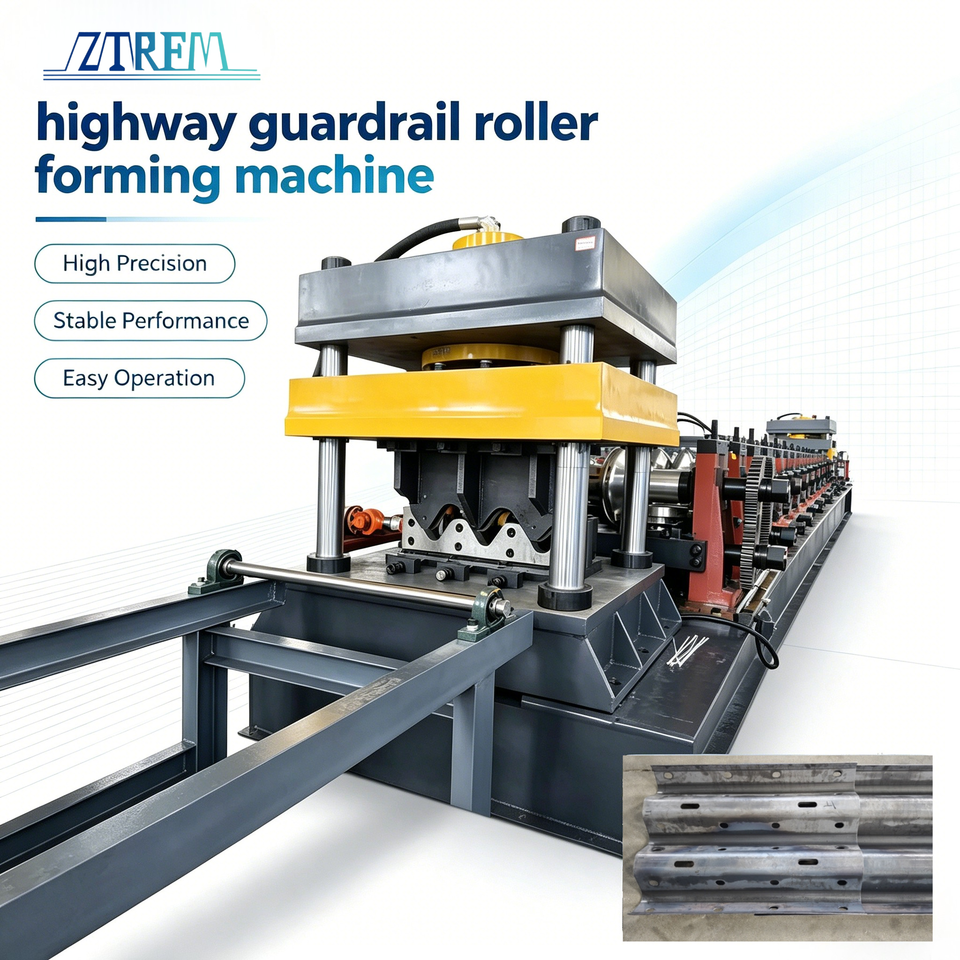
High Speed Highway Guardrail Roll Forming Machine for W Beam Production
$96,050.00

Automatic Metal Cable Tray Production Line with 400T Punching Station
$24,000.00

Fully Automatic CZ Purlin Roll Forming Machine for Steel Structure Buildings
$30,000.00

Gutter Roll Forming Machine Automatic Rain Gutter Production Line Box
$12,000.00